The Sober Curious Revolution: How Singapore’s Fine Dining Scene Is Redefining Beverage Pairings
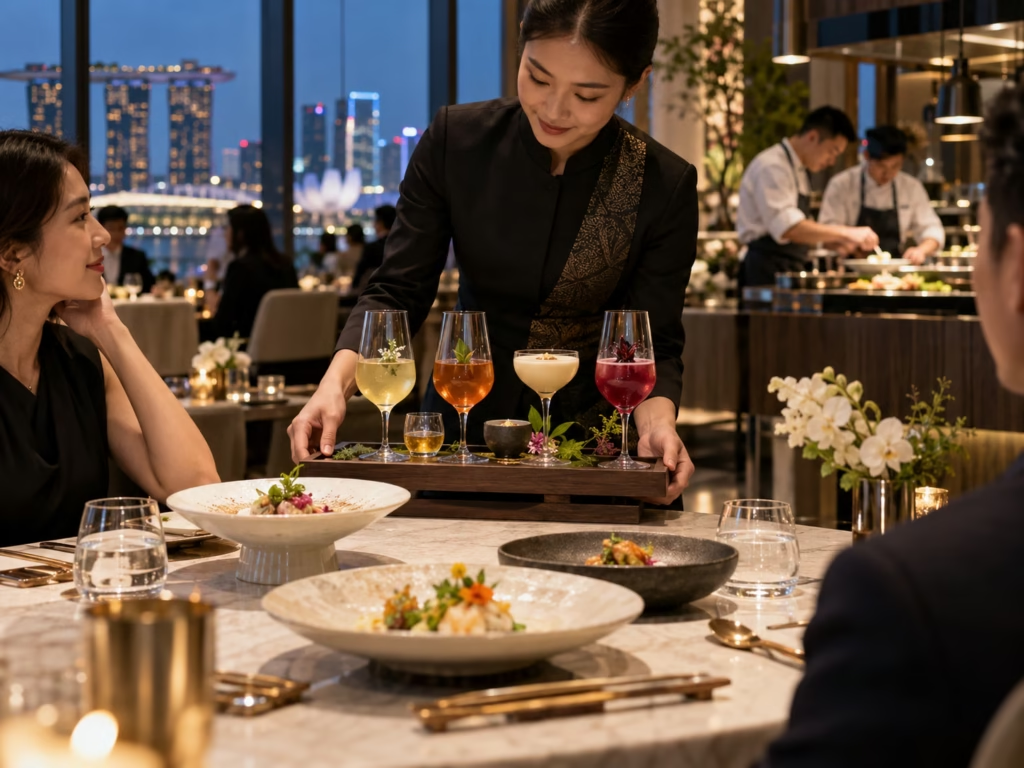
A Cultural Shift in the Glass
The ritual of beverage pairings in fine dining has long been synonymous with wine. But across Singapore’s most celebrated restaurants, a quiet revolution is unfolding—one that is reshaping how the city-state’s culinary elite approach the art of accompaniment.
“Guests are drinking less. That is a fact across the board and at all price ranges,” says Ivan Brehm, chef-owner of One-Michelin-Starred Nouri. This observation, echoed across the industry, has catalyzed a creative explosion in non-alcoholic beverage programmes that rival their alcoholic counterparts in complexity and sophistication.
From Afterthought to Art Form
What began as a practical accommodation—for guests who were driving, pregnant, observing dietary restrictions, or simply choosing not to drink—has evolved into something far more ambitious. Across Singapore’s Michelin-starred establishments, non-alcoholic beverages have been transformed into culinary expressions in their own right.
Gone are the days when non-alcoholic options amounted to little more than a procession of cold-brewed teas served in wine glasses. For many chefs, this shift has opened creative possibilities that wine, with its established traditions and fixed profiles, could never offer.
“Nonalcoholic pairings allow us the flexibility to really go deeper in detail to ensure the flavors complement the food better,” explains Han Liguang, chef-owner of One-Starred Labyrinth. Unlike wine, a house-made beverage can be constructed around a specific dish, with acidity, tannins, texture, and aromatics precisely adjusted to accentuate or balance the food’s character.
Techniques Borrowed from Kitchen and Cellar
This creative freedom has encouraged Singapore’s restaurants to borrow techniques from both the cellar and the kitchen. Kombuchas, lacto-fermentation, freeze clarification, tea infusions, and house-made ferments are now part of fine dining’s non-alcoholic beverage vocabulary.
At Two-Michelin-Starred Thevar, the drinks draw on the spices, herbs, and ingredients that underpin the restaurant’s interpretation of Indian cuisine combined with Malay Peninsula culinary traditions. The beverages are built around the same pantry as the kitchen itself. A standout example is the restaurant’s spiced moru lassi, a savory South Indian buttermilk drink served alongside the signature Chettinad chicken roti.
Crossroads Cooking in a Glass
At Nouri, the restaurant’s “crossroads cooking” philosophy turns pairings into another meeting point for cultures and culinary traditions. A tea-pairing programme that began nearly a decade ago now includes combinations that few would have anticipated. Think pineapple and vanilla tepache inspired by Mexican fermentation traditions, or a hibiscus and xia ku cao infusion that bridges contemporary fine dining and Chinese herbal culture.
This approach reflects Singapore’s unique position as a cultural crossroads, where beverage traditions from across Asia and beyond can be explored without the constraints of European wine conventions. Many of the world’s food traditions evolved alongside their own distinctive beverages—not all of which are alcoholic—and Singapore’s chefs are increasingly drawing on this rich heritage.
The Temperance Menu and Beyond
At Three-Michelin-Starred Odette, the launch of the restaurant’s house-made non-alcoholic pairings, named the Temperance Menu, coincides with its 10th anniversary—a fitting symbol of how far the concept has come. What was once an exception has become an expectation, with diners actively seeking out these thoughtfully crafted programmes.
The implications for Singapore’s F&B industry extend beyond fine dining. As younger consumers continue to redefine their relationship with alcohol, beverage programmes that prioritize flavour, creativity, and inclusivity are becoming a competitive advantage rather than a niche accommodation.
For more insights into Singapore’s evolving dining trends, the Michelin Guide Singapore provides comprehensive coverage of the city’s gastronomic landscape.