The New Australian Car Buyer: How Hybrids, Chinese EVs and Changing Ownership Costs Are Redefining Demand
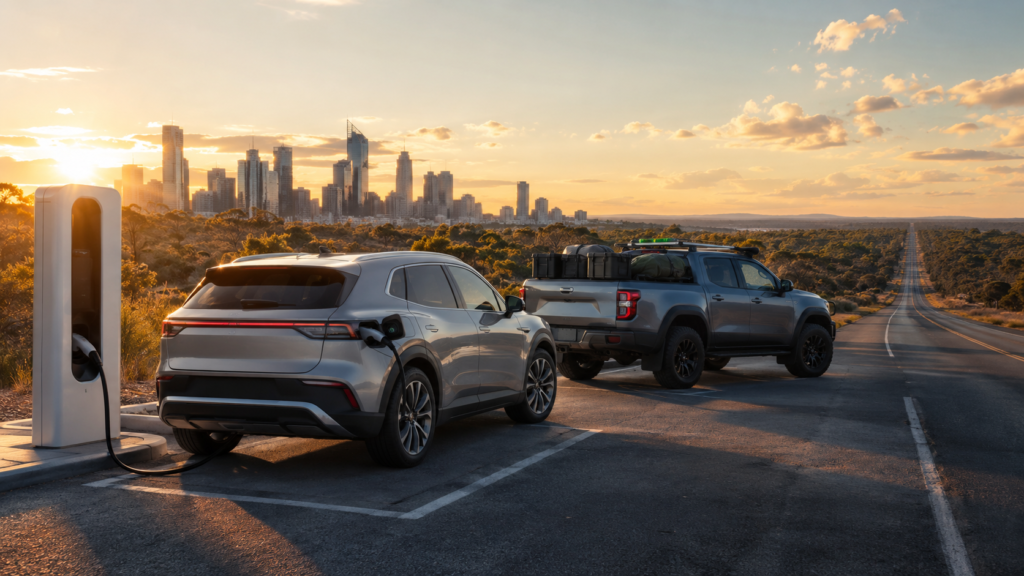
Australia’s automotive transformation is being driven as much by consumer decisions as by government policy. Buyers are now comparing petrol vehicles with hybrids, plug-in hybrids and battery-electric models while considering factors that received far less attention a decade ago.
Driving range, charging speed, battery warranties, software support and home-energy costs have become central purchasing questions. At the same time, the arrival of new brands has increased competition and altered expectations around standard equipment and vehicle pricing.
Hybrids Have Become a Strategic Middle Ground
Australian drivers often travel longer distances than motorists in densely populated overseas markets. Many households also own only one vehicle, meaning that car must handle commuting, school trips, holidays and occasional regional travel.
Hybrids appeal to these buyers because they can reduce fuel use without depending on charging infrastructure. Their popularity demonstrates that the transition away from conventional engines is unlikely to follow a single technological path.
Plug-in hybrids offer a different compromise. They can complete short daily trips using electricity while retaining a combustion engine for longer travel. Their environmental performance, however, depends on whether owners charge them regularly.
Market data published through the Federal Chamber of Automotive Industries’ VFACTS reporting service provides a detailed view of new vehicle sales by brand, model and powertrain.
During 2024, Australians purchased more than 1.2 million new vehicles. Battery-electric cars remained a minority of the total market, while hybrid sales expanded strongly. The figures indicated growing demand for efficiency but also showed that many consumers were not yet ready to rely entirely on battery power.
New Brands Are Reshaping Price Competition
Chinese vehicle manufacturers have expanded rapidly in Australia, particularly in the electric and plug-in hybrid segments. Brands such as BYD, MG and GWM have introduced vehicles with extensive standard technology at competitive prices.
Their growth is increasing pressure on established Japanese, Korean, European and American manufacturers. Competition is no longer based only on engine performance or brand reputation. Buyers now compare battery range, digital interfaces, warranty coverage and software features.
Lower purchase prices could make electrified vehicles accessible to more households. However, consumers also examine dealership coverage, spare-parts availability, repair times and long-term resale values.
Ownership Costs Extend Beyond the Showroom
An electric vehicle can offer lower energy and routine maintenance costs because it has fewer moving mechanical components than a combustion vehicle. The financial outcome depends on how and where the vehicle is charged.
Owners using rooftop solar and home charging may achieve substantial savings. Drivers relying heavily on high-speed public chargers may face higher energy costs.
Insurance can also influence affordability. Repairing damaged battery enclosures, sensors or integrated electronic systems can be expensive. Insurers and repair businesses need technicians trained in high-voltage safety and advanced driver-assistance systems.
Battery condition will become increasingly important in the second-hand market. Independent battery-health reports could eventually play a role similar to mechanical inspections for conventional used vehicles.
Utes and SUVs Will Shape the Transition
Australian consumers continue to favour sport utility vehicles and light commercial vehicles. This means the national transition cannot depend only on compact electric sedans.
Manufacturers must provide electrified vehicles capable of towing trailers, carrying tools and travelling through regional areas. Plug-in hybrid utes may gain early acceptance because they combine electric urban driving with long-distance flexibility.
The winning technology will not be identical for every buyer. Urban households with private charging may move directly to battery-electric vehicles, while regional drivers and commercial users may adopt hybrids or plug-in hybrids first.
Australia’s future car market will be defined by this diversity. Affordability, infrastructure and practical performance will matter more than promotional claims about any single powertrain.