The Capital Gap: Why Agriculture Powers 12% of Australia’s Economy But Attracts Only 2% of Venture Capital
The Mismatch That Defines Australian Agtech’s Next Chapter
Agriculture and food technology attract only around 2 per cent of Australian venture capital, despite the broader food and agribusiness sector contributing an estimated 10 to 12 per cent of the economy . That statistic, highlighted by Tundra Capital managing partner Timothy Hui in 2026, is the defining tension of Australia’s agtech investment story. The sector is economically massive but chronically undercapitalised relative to its importance.
The Capital Is Starting to Move
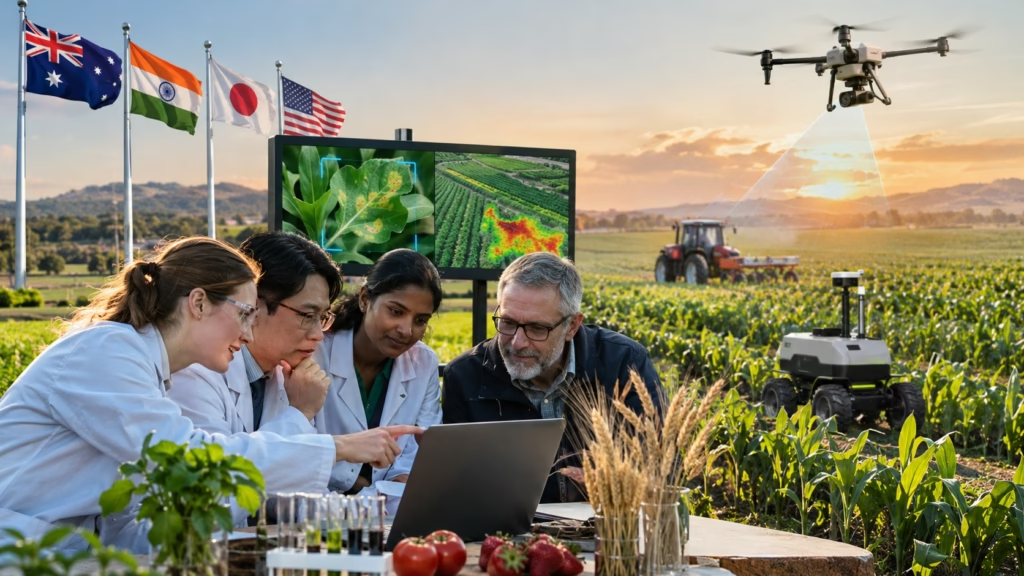
The mismatch is not static. In April 2026, Tundra Capital was targeting USD 120 million for its second fund focused on food, agriculture, and water technology, having expanded its mandate from Australia to a global, Asia-emphasised strategy . The Queensland government awarded QIC a $30 million mandate to manage the *Sowing the Seeds of Farming Innovation Fund*, targeting early-growth-stage agtech ventures including agri-automation and robotics . DataFarming, a Queensland company, raised $2.5 million to accelerate the roll-out of its products to agronomists and farmers .
These are not speculative pledges. They are deployed capital moving into commercialisation.
SwarmFarm: The Proof Point for Robotics
Perhaps the clearest real-world validation comes from SwarmFarm. Co-founder Andrew Bate told delegates at Global AgInvesting Australia that the company had deployed autonomous systems across more than 6.5 million hectares globally, accumulating more than 540,000 operating hours . Its latest development — autonomous refill technology that allows robots to return to a field-based station, refill with fertiliser or chemicals, and continue operating without human intervention — has already been deployed commercially .
Bate’s explanation for why this innovation emerged in Australia is instructive: “Innovation happens where the system’s most under pressure. Australian farmers have to adapt, they have to innovate, they have to be efficient” . That pressure — labour shortages, climate variability, and cost constraints — is precisely what makes Australian agtech investable, even if the venture capital community has been slow to recognise it.
The Investor Thesis: From Commodity to Productivity
Jonathan Levin of Global AgInvesting noted that the investors represented at GAI Australia manage more than US$10 trillion in assets, and many are increasingly focused on food security, productivity, and resilience . “Agriculture is becoming a technology story as much as a commodity story,” Levin said . The technologies attracting attention are those delivering measurable improvements in productivity while helping producers manage labour constraints, climate variability, and rising costs .
The Real-World Test: Commercialisation, Not Pilots
The critical question for 2026 and beyond is whether the capital now flowing into Australian agtech can move technologies from pilot projects to commercial scale. The Tundra, QIC, and DataFarming examples suggest the infrastructure is forming. SwarmFarm’s operating hours suggest the demand exists. The remaining challenge is the one identified at the SPAA Expo: ensuring that growers have the confidence and business-case clarity to adopt these tools at scale . If that gap closes, the 2 per cent venture capital figure may finally begin to reflect agriculture’s 12 per cent economic reality.