Malaysia’s Animation Industry 2026: From Japanese Outsourcing to Homegrown IP
The Strategic Bet on Animation
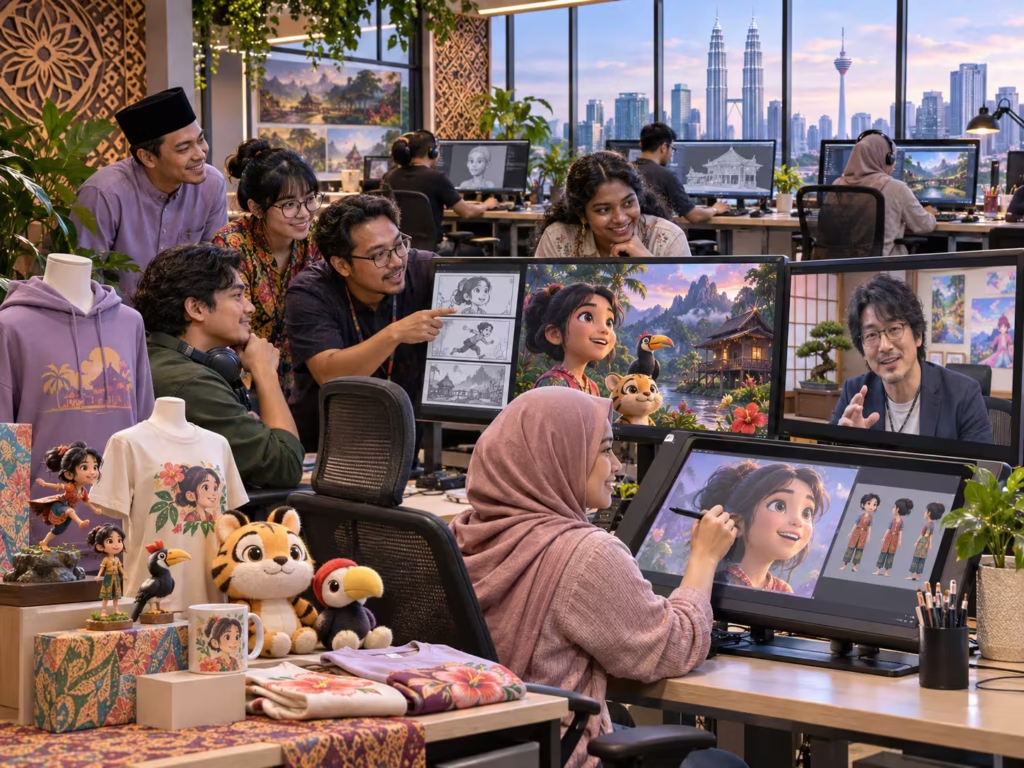
Malaysia’s film agenda has a quiet second engine, and it is animated. In January 2026, FINAS confirmed that animation is a key focus area in the National Film Policy being drafted for the next decade, with an integrated strategy covering talent development, content production, marketing, distribution, and intellectual property commercialisation. The agency’s chief executive, Datuk Azmir Saifuddin Mutalib, framed the role explicitly: FINAS is no longer merely a funder but an industry driver coordinating licensing, talent, and market access to build a sustainable animation ecosystem rather than short-term projects.
The Japanese Outsourcing Breakthrough
The clearest signal of Malaysia’s technical credibility came in May 2026, when FINAS disclosed that a Japanese animation studio was in advanced discussions to outsource a cinema-release animation project to a Malaysian production company under the Film in Malaysia Incentive. The significance lies in the source: Japanese animation studios rarely offshore work outside Japan. Azmir attributed the interest to Malaysia’s 3D animation capabilities reaching international standards, with the Japanese side having already identified a local partner. If completed, the project would mark a shift from Malaysia as a service provider for regional television content to a trusted partner in high-end theatrical animation.
Beyond the Screen: Merchandise, Licensing, and Brand Value
FINAS is also pushing producers to think beyond box-office receipts. Azmir pointed to Les’ Copaque and Didi & Friends as proof that Malaysian animation can generate revenue through merchandising, apparel, licensing, and branding across ASEAN markets. The policy target is explicit: the government aims to create 20 new animation intellectual properties, backed by over RM130 million for the creative industry and an entertainment-duty exemption for local film and theatre screenings in the Federal Territories from 2027. The logic is that IP ownership, not production volume alone, determines whether animation becomes a durable export industry.
The Talent Warning Beneath the Optimism
The ambitious strategy carries an uncomfortable data point. Azmir acknowledged a recent decline in animation student enrolment despite growing industry demand, and said FINAS would strengthen collaboration with six universities and introduce train-the-trainer programmes to align curricula with industry needs. The MADANI Creative Youth Programme is being used to expose younger Malaysians to animation, digital content, and artificial intelligence techniques. The risk is straightforward: without a replenished talent pipeline, outsourcing contracts and IP ambitions will outrun the workforce available to execute them.
The Regional Race
Malaysia’s advantage in animation is real but not unassailable. FINAS describes the country as one of the region’s main leaders, ahead of several ASEAN neighbours and supported by FIMI. The next phase depends on whether local studios can convert service work into original IP, and whether the education system can reverse the enrolment slide before the current momentum dissipates.