Fast Fashion vs. Filipino Slow Luxury: How Local Designers Are Differentiating in a Crowded Global Market
The Fast Fashion Pressure on Local Production
The Philippine apparel market is dominated by fast fashion imports, which compete aggressively on price and speed. Local designers face significant pressure to lower costs, but many have chosen a different path: positioning themselves in the slow luxury segment. This strategy relies on craftsmanship, limited production runs, and cultural storytelling to justify higher price points and attract discerning international customers.
Slow Luxury as a Unique Selling Proposition
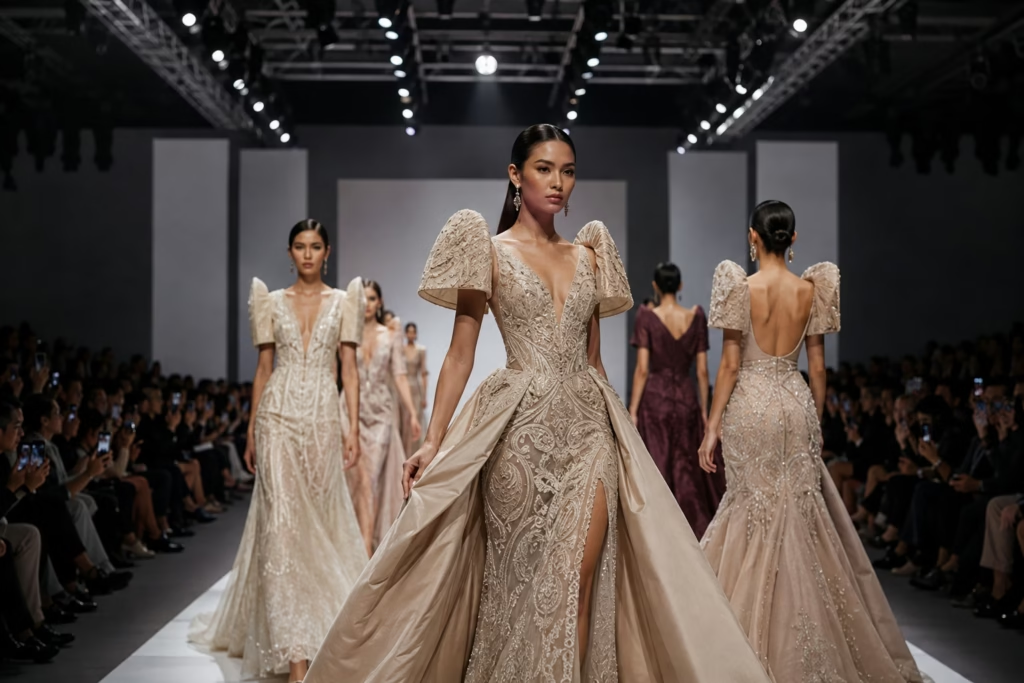
Slow luxury is not simply about high prices; it is about transparency, durability, and emotional connection. Filipino designers emphasize handmade techniques such as hand embroidery, beadwork, and handloom weaving. These processes are time-intensive and cannot be replicated by mass production. As a result, each garment carries a unique narrative that appeals to consumers who are tired of disposable fashion. International buyers are increasingly seeking out these products as an alternative to homogenized global brands.
Challenges in Supply Chain and Intellectual Property
Despite the appeal of slow luxury, Filipino designers face real obstacles. Supply chains for artisanal materials can be fragmented, making it difficult to scale production while maintaining quality. Intellectual property protection is another concern, as traditional patterns and designs are sometimes copied by overseas manufacturers. Designers are responding by registering collective trademarks, using blockchain for provenance tracking, and forming cooperatives that strengthen negotiating power.
Market Positioning and Consumer Data
A 2026 BusinessWorld report notes that while fast fashion accounts for 68 percent of Philippine apparel imports, exports of high-value artisanal garments grew by 14 percent year-on-year BusinessWorld. This divergence suggests that the slow luxury segment is expanding even as cheap imports flood the domestic market. The growth is driven primarily by consumers in North America, Europe, and the Middle East who are willing to pay a premium for ethically made, culturally significant pieces.
A Defense of Artisanal Value
The slow luxury movement in the Philippines is also a form of cultural defense. By creating sustainable livelihoods for weavers, embroiderers, and small-scale ateliers, designers help preserve skills that might otherwise disappear. This social impact is increasingly important to international retailers that need to meet environmental, social, and governance standards. Filipino slow luxury brands are therefore well positioned to enter premium department stores and online platforms that curate ethically produced fashion.
The contrast between fast fashion and Filipino slow luxury highlights a broader shift in global consumer behavior. As more buyers prioritize provenance and craftsmanship, Philippine designers are finding that their heritage is not a limitation but a competitive advantage.