Australia’s Economic Powerhouse: Natural Resources, Key Industries, and the Digital Shift
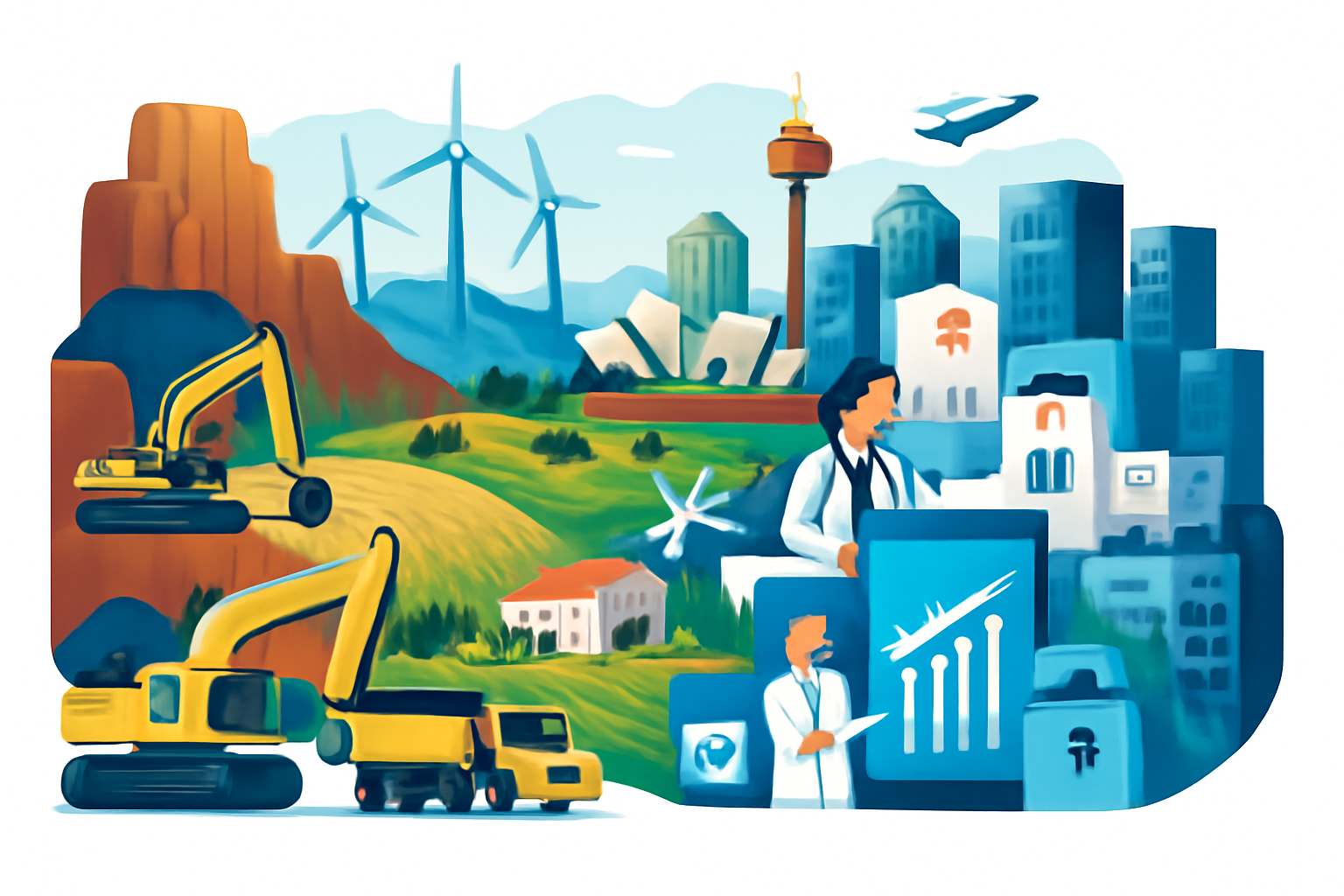
Australia’s economy is multifaceted and dynamic, marked by its rich natural resources, diverse industries, and the rapid expansion of its digital economy. These elements interact to create a robust economic structure that places Australia among the most influential economies in the Asia-Pacific region.
Abundant Natural Resources: A Foundation of Wealth
Australia is blessed with vast natural resources that play a pivotal role in the country’s economic success. As one of the world’s largest exporters of minerals, the mining industry is at the core of Australia’s economic engine. Australia is a major global supplier of iron ore, coal, natural gas, and gold. These resources are essential for various industries worldwide, particularly in construction and energy production.
The mining sector is also a major employer in Australia, with thousands working in extraction, logistics, and technology. Furthermore, innovations in mining technology, such as automation and data-driven resource management, have helped increase efficiency while improving safety.
Beyond minerals, Australia is an agricultural giant, exporting a wide range of products, including beef, wool, and wheat. With advanced farming practices and a focus on sustainability, the agricultural sector continues to be a significant contributor to Australia’s export revenues.
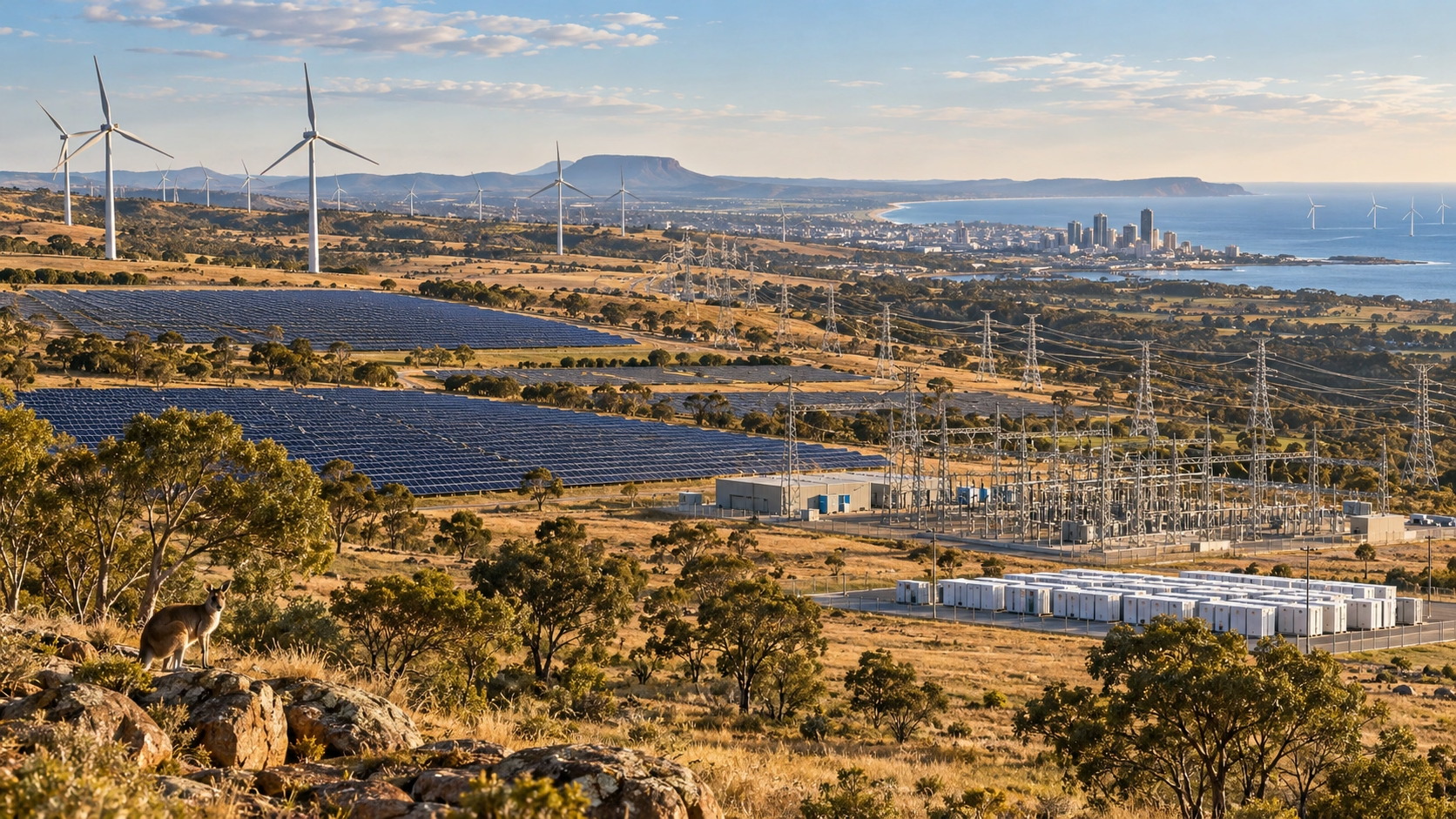
Renewable energy resources are also abundant, and Australia is investing heavily in solar, wind, and geothermal energy as part of its transition to a sustainable, low-carbon economy. This growing focus on renewable energy not only supports the global shift toward clean energy but also opens up new economic opportunities in green technology.
Industry Diversity: Expanding Beyond Resources
Australia’s economy has evolved significantly from its reliance on natural resources. The service sector now plays a key role in the nation’s economic output, contributing the largest share to the country’s GDP. Within this sector, industries such as finance, tourism, education, and healthcare are among the most vital.
Australia is a financial hub in the Asia-Pacific region, with major cities like Sydney and Melbourne hosting international banks and financial institutions. The financial services industry facilitates investment, trade, and innovation, positioning Australia as a leading center for banking, insurance, and wealth management in the region.
The tourism industry is another significant contributor to Australia’s economy. Known for its stunning landscapes, vibrant cities, and world-class attractions, Australia consistently ranks as a top destination for global travelers. This drives economic activity in the hospitality, transportation, and entertainment sectors, creating a wide array of jobs and boosting local economies.
Manufacturing in Australia is gradually shifting toward high-tech industries, including biotechnology, medical devices, and aerospace engineering. This shift is part of Australia’s broader strategy to focus on advanced industries that can compete in global markets while providing high-quality, value-added products.
Australia’s healthcare system, a mix of public and private services, is also a critical component of the economy. With a growing and aging population, the demand for healthcare services is expected to rise, presenting significant opportunities in both the public and private sectors.
The Digital Economy: Australia’s Future
The digital economy in Australia is evolving rapidly, with a marked shift toward e-commerce, fintech, and digital services. Technology has become a central part of business operations and consumer experiences, allowing businesses to reach global markets with greater ease.
Fintech is one of the most rapidly expanding sectors in Australia. The country is a global leader in digital banking, payment systems, and blockchain technology. Australia’s regulatory environment is conducive to innovation, offering a supportive framework for startups and established companies alike to develop cutting-edge financial technologies.
Cybersecurity is another crucial aspect of Australia’s growing digital economy. As businesses increasingly rely on digital systems, ensuring the security of data and financial transactions is paramount. The Australian government, along with private sector stakeholders, is investing in strengthening cybersecurity measures to protect both businesses and consumers.
The Australian government is also working to digitize public services to improve efficiency and accessibility. Digital transformation is making it easier for citizens to access services, while industries like education and healthcare are adopting digital solutions to increase access and reduce costs.
In conclusion, Australia’s economy thrives on a combination of natural resources, diverse industries, and rapid digital advancements. This blend ensures a resilient and competitive economy that is well-positioned for the future.