151 Rice Processing Systems and a P74.4-Million Facility: Modernizing Philippine Milling and Drying
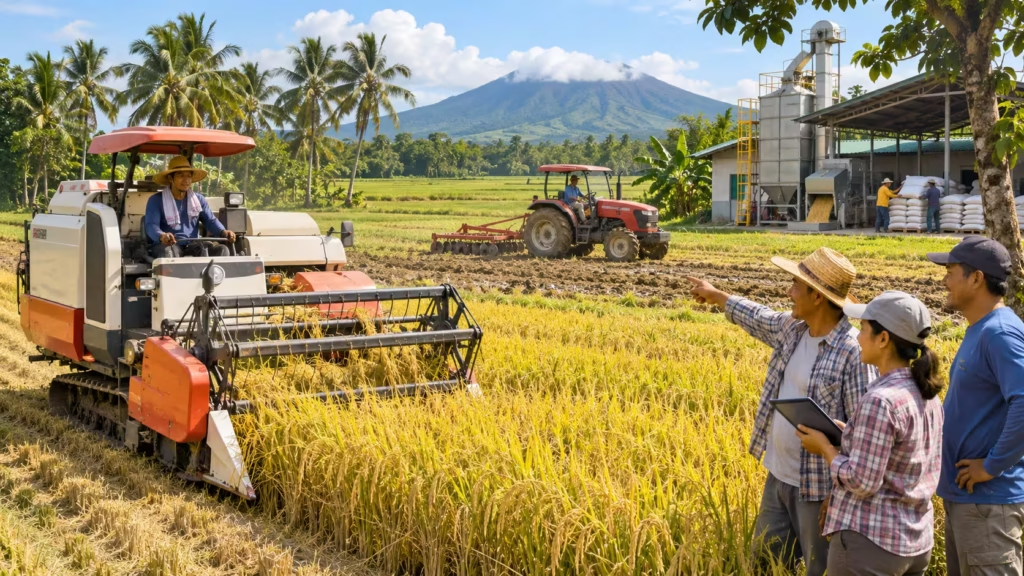
The Philippines’ rice processing infrastructure expanded significantly in 2026, with the number of Rice Processing Systems (RPS) established under the Rice Competitiveness Enhancement Fund (RCEF) reaching 151 nationwide. These integrated mills and dryers are not showpieces; they are designed to shift value back to farmers’ cooperatives and reduce the postharvest losses that have historically drained income from the rice value chain.
The RCEF Rice Processing System Rollout
Of the 151 RPS established through RCEF, 87 were already operational as of March 2026, with the remainder scheduled to start in the following days. The facilities were distributed to rice farmers’ cooperatives and associations in 40 local government units across the country. The impact on farmer income is measurable: through modern postharvest facilities, farmers enjoy PHP2 to PHP3 per kilo in additional earnings, or about 3 to 5 percent in additional income. President Ferdinand R. Marcos Jr., who visited an RPS in Nueva Ecija, described the model in direct terms: “The milling and drying are here. All the value-added is already here. These were left to the cooperatives, to the farmers”. The RCEF program has a yearly fund of PHP9 billion and has benefited more than 8,000 farmers’ cooperatives.
Cabanatuan’s New 4-5 Ton-Per-Hour Mill
In September 2026, the DA inaugurated a PHP74.4-million Rice Processing System III in Cabanatuan City, Nueva Ecija—the country’s main rice-producing province—giving 4,060 farmers access to modern drying and milling equipment. The facility includes a multi-stage rice mill with a capacity of 4–5 tons per hour and three recirculating dryers, each with a 12-ton-per-batch drying capacity. It will serve farmers cultivating about 8,976 hectares of rice land. Agriculture Secretary Francisco P. Tiu Laurel Jr. said the value of such investments should be measured by their impact on farming families: “The true progress of agriculture is not measured only by the volume of rice harvested, but by the comfort and prosperity it brings to the table of every farming family”.
From Farmgate Sales to Value Retention
The core economic problem the RPS model addresses is the farmer’s weak bargaining position immediately after harvest. When drying and milling capacity is distant or unavailable, farmers sell palay wet and at low prices, forfeiting the value that processing could add. By placing modern drying and milling services closer to farms, the RPS model reduces reliance on immediate farmgate sales and allows cooperatives to capture more of the value chain. The Cabanatuan facility, for example, is expected to speed up drying and milling, reduce postharvest losses, improve rice quality, and increase farmers’ net income. The RCEF Mechanization Program, which funds these facilities, was extended through 2031 under amendments to the Rice Tariffication Law, with its annual allocation increased from PHP5 billion to PHP9 billion—a signal that the processing-integration model is being treated as a long-term strategy rather than a pilot.
Scaling the Model Across the Rice Value Chain
The 151 RPS facilities represent a distributed processing network rather than a single large investment. Each unit combines a modern rice mill and dryers, and the cooperatives that receive them are expected to support their members with shared access to equipment that individual farmers could not afford. By the end of 2026, the government also planned to establish 370 rice drying facilities-warehouses, further expanding the postharvest backbone. The model’s test will be whether cooperatives can maintain utilization rates, manage operating costs, and translate processing margins into sustained member income—but the direction of policy is clear: the Philippines is investing in the middle of the rice value chain, not only at the farm gate.