Regional MSMEs Break Into National Markets: Inside Isabela’s ₱7-Million Marketing Push and the Rise of Provincial Trade Fairs
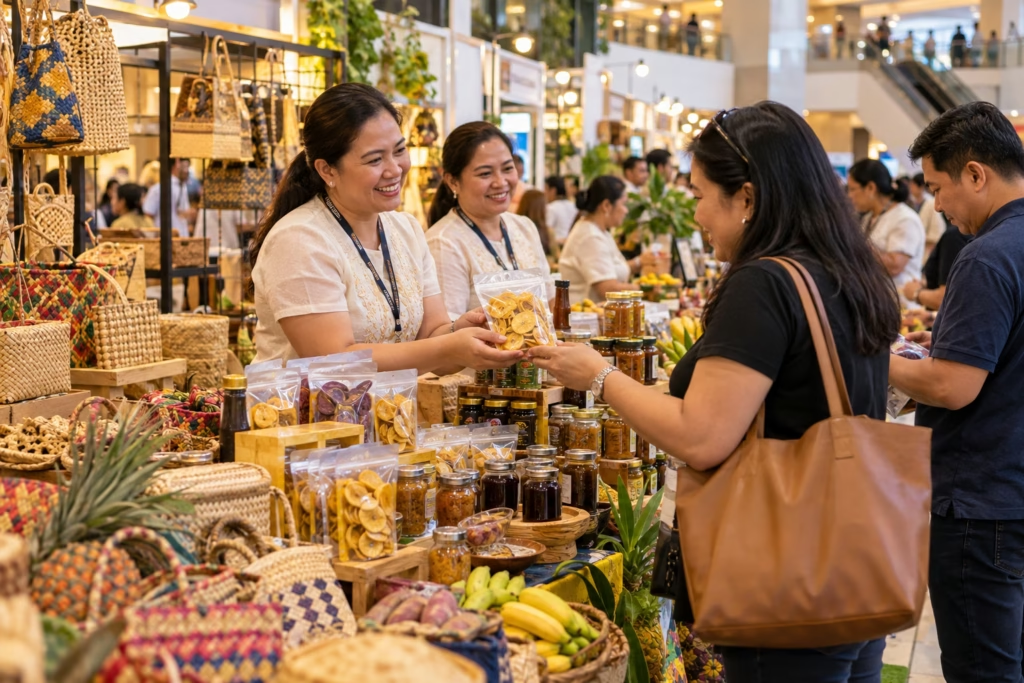
From Provincial Workshops to National Storefronts
For decades, MSMEs outside Metro Manila have faced an intractable challenge: producing excellent products but lacking the market access to sell them beyond their immediate localities. That dynamic is now being systematically dismantled in Isabela, where the provincial government has injected ₱7 million in marketing assistance into 70 local enterprises to prepare them for a national trade expo in Metro Manila.
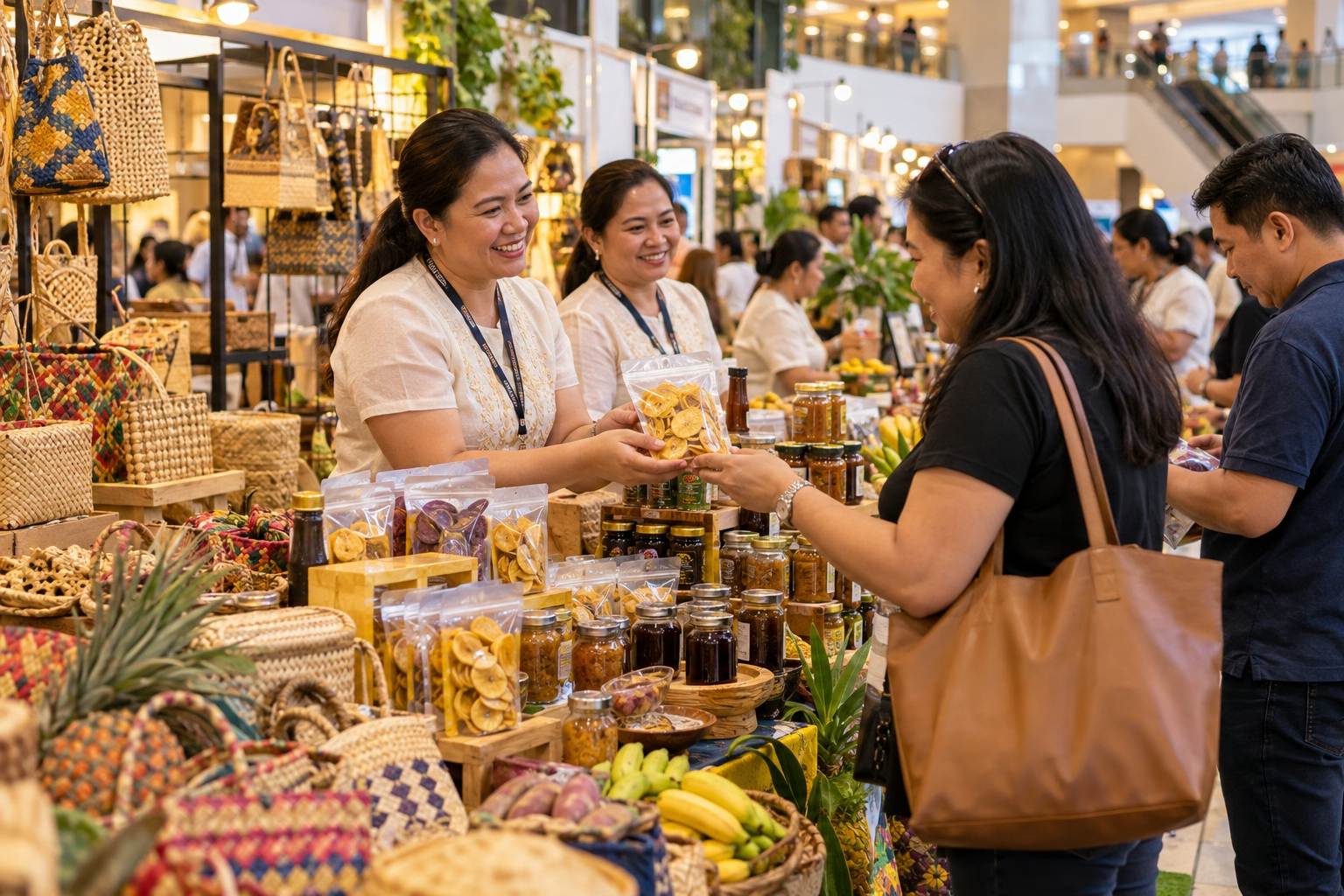
The initiative, part of the Isabela Recovery Initiatives to Support Enterprises (I-RISE) Program, provided each beneficiary with ₱100,000 in marketing support ahead of the Isabela Best Laku 2026 trade fair, held from October 19 to 25 at Festival Mall Alabang in Muntinlupa City. The 70 beneficiaries comprised 48 food producers and 22 non-food enterprises, joined by 14 additional MSMEs for a total of 84 participating businesses — a significant expansion from the 34 beneficiaries in 2025.
Investing in Capacity, Not Just Aid
Isabela Public Employment Service Office Manager Cecilia Claire N. Reyes framed the assistance not as charity but as strategic investment: “We are not just giving aid; we are investing in their capacity to compete and succeed.” This distinction matters because it reflects a maturing approach to MSME development — one that recognizes that market access, not just production capability, determines whether small enterprises can scale.
DTI Region 2 Regional Director Ma. Sofia G. Narag commended the provincial government for its sustained support, noting that partnerships between local government units and national agencies are critical for advancing grassroots economic development. She emphasized that the initiative complements the national government’s inclusive growth agenda under President Ferdinand R. Marcos Jr., which seeks to strengthen MSMEs and create opportunities for local enterprises to access wider markets.
Why Trade Fairs Matter More Than Ever
The significance of trade fairs extends beyond immediate sales. As DTI Secretary Ma. Cristina Roque observed, “Products remain as products unless we put it in a place where we can sell them.” Trade shows in Metro Manila generated approximately ₱1 billion in sales in the first half of 2026 alone, compared with about ₱600 million for the whole of the previous year — evidence that face-to-face market linkages remain a powerful channel for MSME growth.
The DTI is also developing dedicated MSME “green lanes” with the Anti-Red Tape Authority, Bureau of Internal Revenue, Food and Drug Administration, and Bureau of Fire Protection to cut permitting delays. The system, targeted for completion by year-end or the first quarter of 2027, would include standardized fee caps and temporary permit rules to allow compliant enterprises to start selling and earning sooner. Senator Bam Aquino, who chaired the Senate hearing where these plans were discussed, emphasized that requirements should reflect the size, risk profile, and complexity of a business rather than imposing identical rules on small enterprises and large corporations.
The Ripple Effects of Regional Market Access
When an MSME from Isabela secures a contract with a Metro Manila distributor, the benefits cascade far beyond the enterprise itself. Local farmers who supply raw materials gain a stable buyer. Transport providers gain consistent business. Workers gain more reliable hours. The Isabela Best Laku trade fair thus represents more than a week-long sales opportunity — it is a mechanism for integrating provincial economies into national supply chains.
DTI is also linking MSMEs with major retailers, providing free space through its MSME Hub, and using its network of 29 trade attachés in 21 countries to connect smaller businesses with foreign buyers and export supply chains. For provincial enterprises that have long been confined to local markets, these initiatives offer a structured pathway to national and international visibility.
The I-RISE model — combining direct financial assistance, capacity building, and coordinated market access — provides a replicable template for other provinces seeking to transform their MSME sectors from survival-mode operations into growth-oriented enterprises. As the number of beneficiaries doubled year-over-year, the program demonstrates that when local governments invest strategically in market linkage, the returns are measured not just in sales figures but in expanded economic horizons for entire communities.