Vivaoke and the Digitization of Filipino Karaoke Culture: How OPM’s Most Beloved Tradition Went Global
The Cultural Logic Behind an All-OPM Karaoke App
Karaoke is not merely a pastime in the Philippines — it is a social institution. From neighborhood videoke machines to family gatherings, the act of singing along to Filipino songs has long served as a communal ritual. In September 2026, Viva Communications Inc. and Viva Music Group translated that tradition into the digital space with the launch of Vivaoke, a karaoke application featuring an entirely Original Pilipino Music catalog.
The app, officially launched on September 16, allows users to sing along to Filipino songs, record performances, save sessions, and share them on social media. An in-app scoring system lets users gauge their performance in real time. The catalog spans generations, combining OPM classics like Hotdog’s “Bongga Ka ‘Day” and Sharon Cuneta’s “Bituing Walang Ningning” with contemporary hits such as Cup of Joe’s “Multo” and Arthur Nery’s “Isa Lang”.
Why the Catalog Choice Matters
The decision to build an exclusively OPM catalog is strategically significant. For decades, Filipino videoke culture has been dominated by international pop standards alongside local favorites. Vivaoke’s all-Filipino library represents a deliberate assertion that OPM possesses sufficient depth and breadth to sustain an entire karaoke ecosystem on its own.
The Juans’ Carl Guevarra framed the app’s significance from an artist’s perspective: “When you’re starting out in the industry, one of the dreams of artists is that someday, you’ll see the song you made or sang in a videoke machine. So with the Vivaoke app, the fulfillment of those dreams is now closer”. Amiel Sol, whose “Sa Bawat Sandali” is included in the catalog, echoed this sentiment, noting that having one’s music performed by others is “part of your dreams” as a Filipino artist.
The Broader Streaming Infrastructure Context
Vivaoke arrives at a moment when the Philippine music market is experiencing unprecedented digital growth. The Philippines is Southeast Asia’s second-fastest-growing music market, with recorded music revenue reaching $88.3 million in 2024, up 17.9% year on year. Streaming accounts for 91.6% of that revenue, and Filipino music content on Spotify has grown fourfold over five years.
Vivaoke follows Viva’s existing streaming platforms Viva One, VMX, and Viva Movie Box, extending the company’s digital footprint into interactive music consumption. The app offers premium subscriptions starting at ₱99 per month, with a yearly plan at ₱949, and the library is slated for regular updates.
Karaoke as Soft Power and Cultural Export
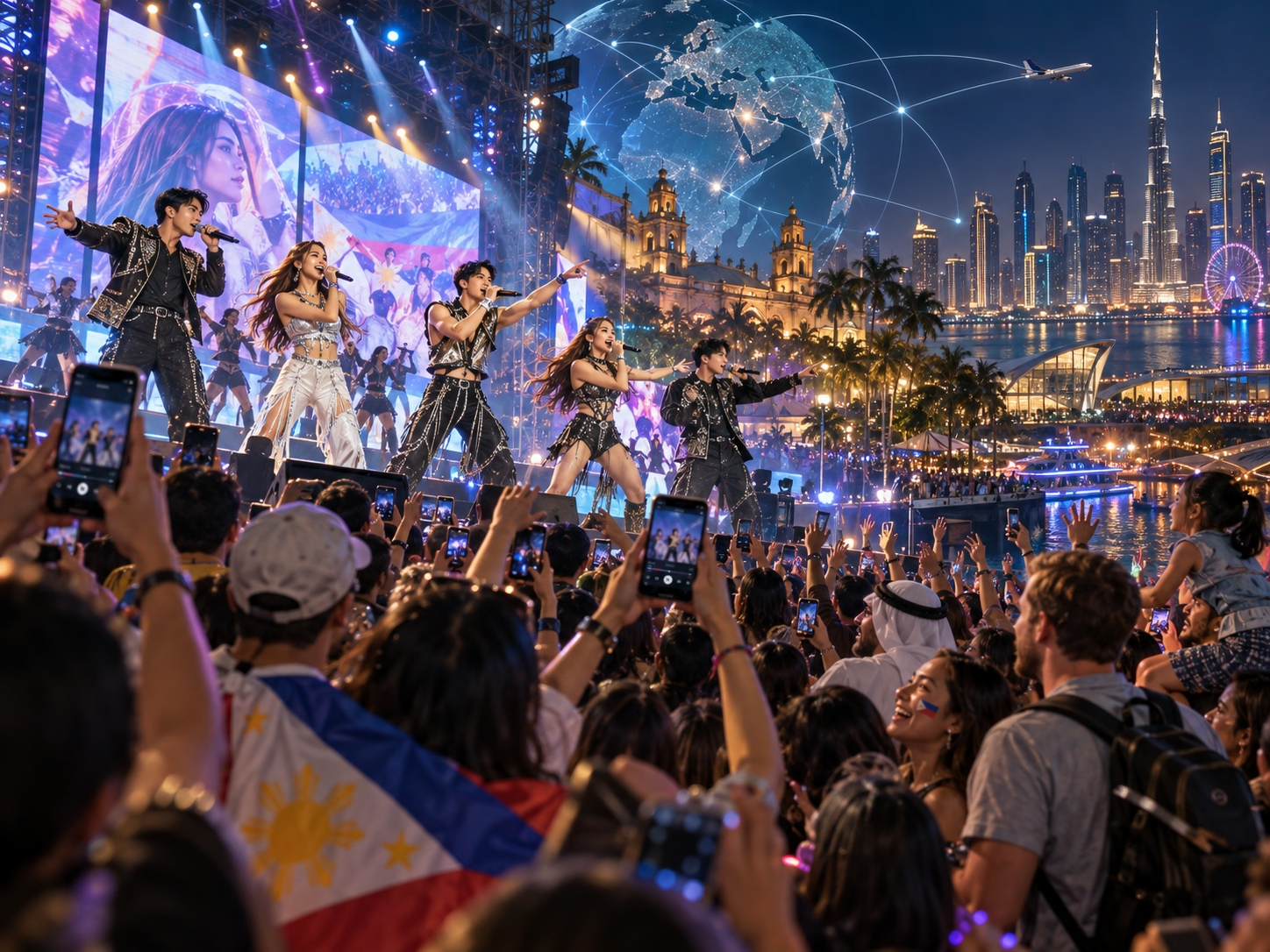
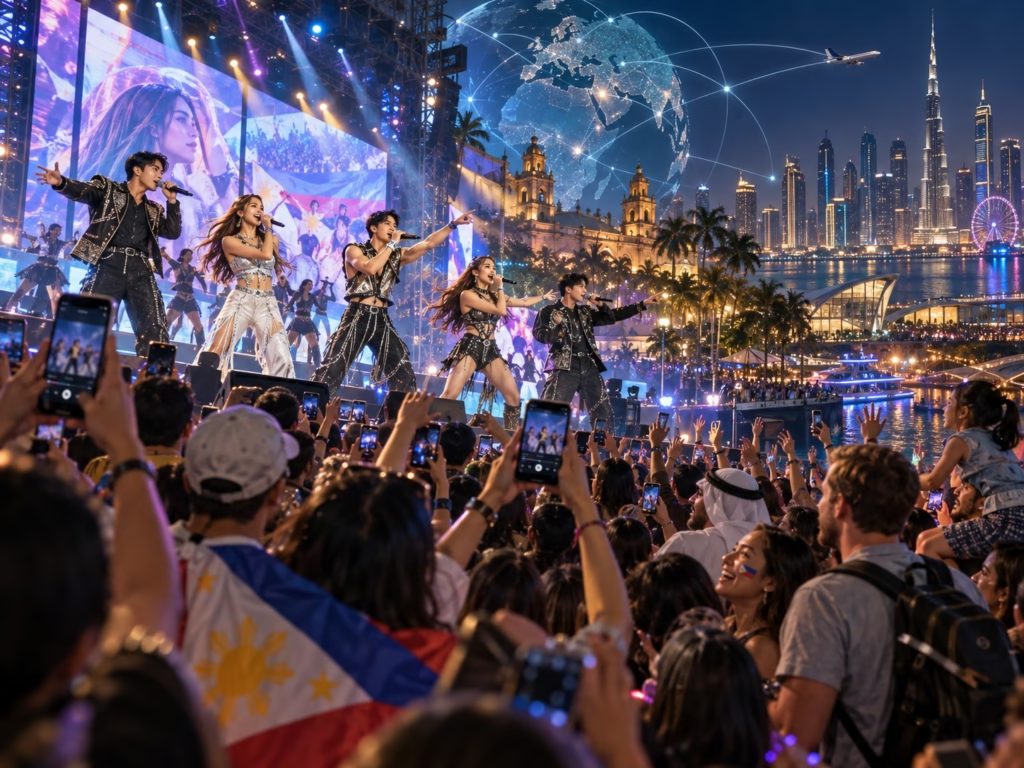
What makes Vivaoke more than a commercial product is its potential role in cultural export. Karaoke is one of the Philippines’ most recognizable cultural exports, practiced wherever Filipino communities exist — from Dubai to Los Angeles to Hong Kong. A digital, all-OPM karaoke platform gives diaspora Filipinos a portable connection to home, while also introducing non-Filipino users to the depth of Filipino songwriting.
The timing aligns with the broader internationalization of Filipino music. P-pop acts like BINI and SB19 have drawn global attention to OPM, and platforms like Weverse have opened official fan communities for Filipino groups. Vivaoke complements these export-oriented developments by anchoring Filipino music in an activity that is uniquely Filipino — singing together, regardless of vocal talent, with songs that belong to the culture.
For artists, the app also represents a new revenue stream and a new form of audience engagement. For listeners, it transforms passive streaming into active participation. And for the industry, it signals that the digital transformation of Filipino music extends beyond distribution and into experience.