Singapore’s Esports Paradigm Shift: From Niche Hobby to National Sport
Singapore has fundamentally altered the status of competitive gaming within its national sporting framework, a legislative decision that carries cascading implications for talent development, infrastructure investment, and the city-state’s positioning within the Asia-Pacific esports economy.
The January 2026 Legislative Milestone
On 14 January 2026, Singapore’s Parliament passed an amendment to the Singapore Sports Council Act officially recognising esports and mind sports as sports disciplines in their own right. The amendment empowers SportSG, the national sports development agency, to fully integrate esports into its development missions on equal footing with traditional athletic disciplines.
This institutional recognition represents more than symbolic validation. It unlocks public support mechanisms spanning infrastructure, structured training programmes, talent pathways, and competitive event organisation—resources that were previously unavailable or inconsistently applied to the gaming sector.
The National Training Centre at GR.iD
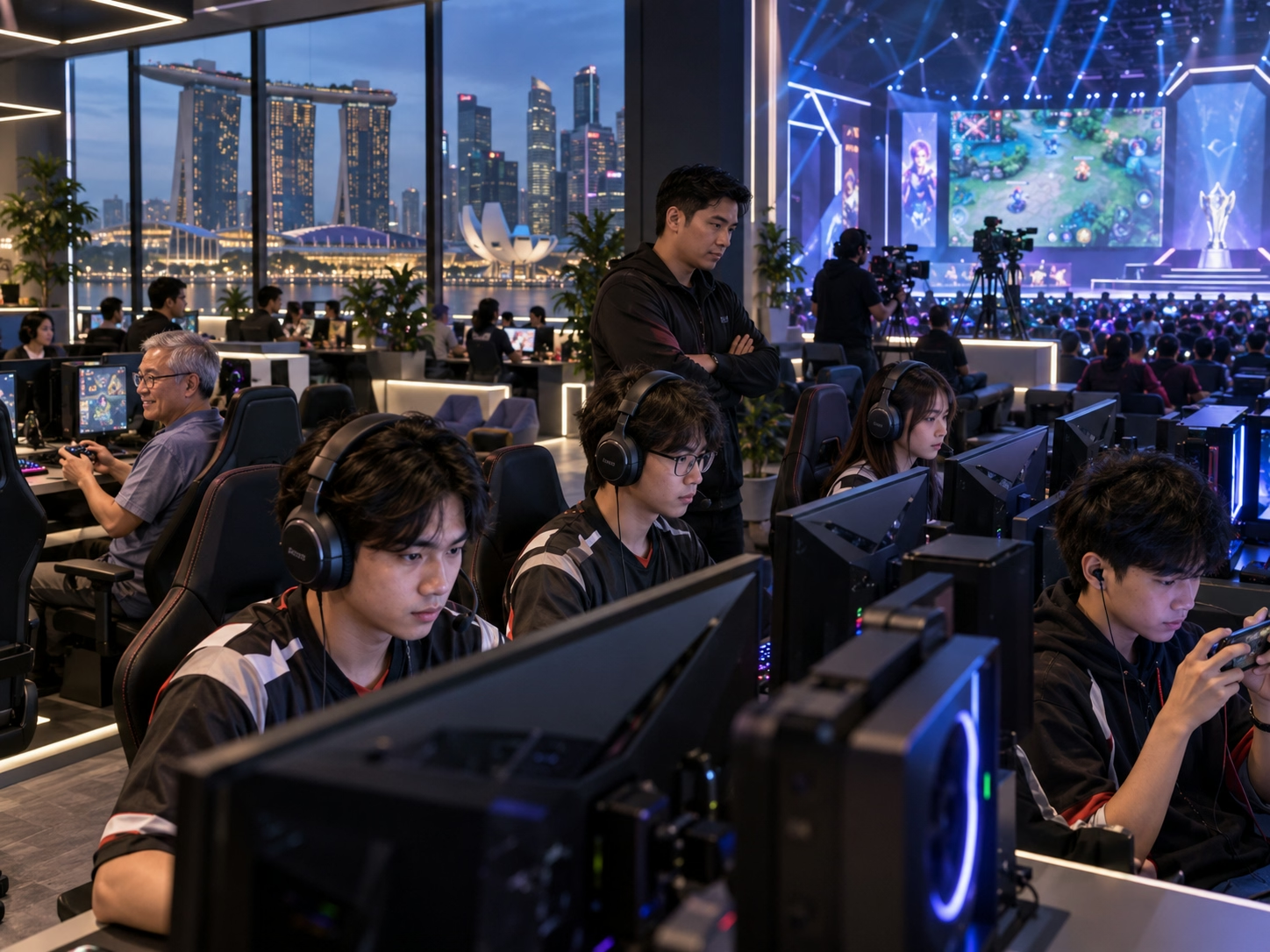
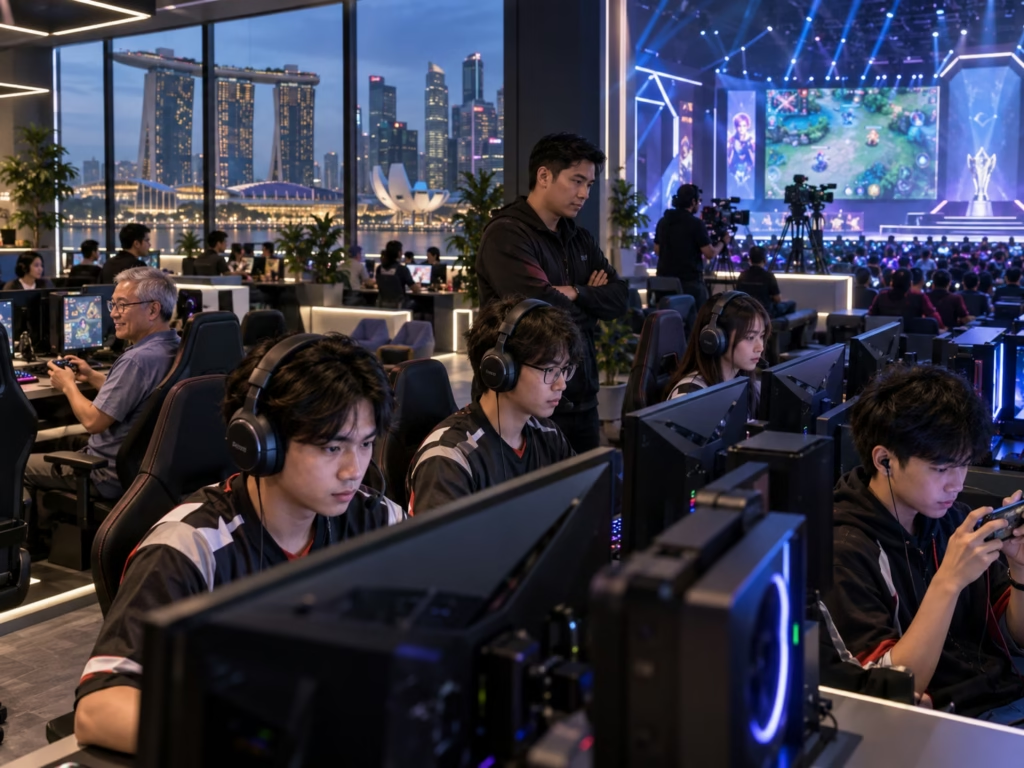
The concrete manifestation of this policy shift arrived on 27 February 2026, when the Singapore Esports Association (SGEA) opened its official National Training Centre (NTC) at GR.iD. The facility is supported by global esports venue brand Wanyoo Esports and operates in partnership with Singapore strategic partner YOYO Esports.
The NTC provides aspiring professional players with access to high-performance training environments, coaching resources, and competitive scrimmage infrastructure. Its establishment signals that Singapore intends to treat esports talent development with the same seriousness applied to traditional sports academies—a critical step in building a sustainable pipeline from grassroots participation to elite competition.
Hosting the Asian Games Esports Qualifiers
Singapore’s competitive ambitions were further validated when the city-state was confirmed as host for the Asian Games Esports Events Qualifiers, scheduled from 30 May to 21 June 2026. The event features titles including Identity V, Naraka Bladepoint, and Mobile Legends: Bang Bang, bringing regional teams and international attention to Singapore’s esports infrastructure.
Hosting qualifiers of this magnitude demonstrates operational capability while reinforcing Singapore’s growing role as a regional hub for major international esports events.
PGL and the Counter-Strike 2 Major
The most commercially significant development on Singapore’s esports calendar is PGL’s confirmation that Singapore will host the second Counter-Strike 2 Major of 2026, scheduled from 25 November to 13 December. Major tournaments of this scale generate substantial economic activity through visitor spending, broadcast rights, sponsorship activation, and global media exposure.
For Singapore’s broader entertainment ecosystem, the CS2 Major represents an opportunity to demonstrate that the city-state can execute world-class competitive gaming events at the highest professional tier.
Grassroots Development and Cross-Generational Engagement
Beyond elite competition, Singapore’s esports strategy incorporates grassroots development and community building. The Singapore Youth Esports League launched in 2026 to establish structured competitive pathways for young players. The SEA Esports Nations Cup introduced a unified regional competition system at the national team level, fostering cross-border rivalries and collaborative development.
Notably, the ecosystem is expanding beyond youth demographics. Senior-friendly gaming hubs have emerged alongside professional training facilities, demonstrating that esports and digital gaming can serve as bridges across generations rather than solely as youth-oriented activities.
The Economic and Cultural Logic
The government’s recognition of esports as a driver of innovation, international appeal, and value creation reflects a strategic understanding that digital cultural industries occupy an increasingly central position in Singapore’s economy. By creating a clear and favourable regulatory framework, Singapore aims to attract publishers, event organisers, technology platforms, and investors seeking a stable, well-connected regional base of operations.
The convergence of legislative recognition, purpose-built infrastructure, international event hosting, and grassroots development creates a self-reinforcing ecosystem. Each component strengthens the others: prestigious tournaments attract investment, investment improves facilities, facilities nurture talent, and talent success generates cultural momentum that sustains public and commercial interest.