Carziqo’s Growing City Footprint Points to Wider Potential in Autonomous Mobility
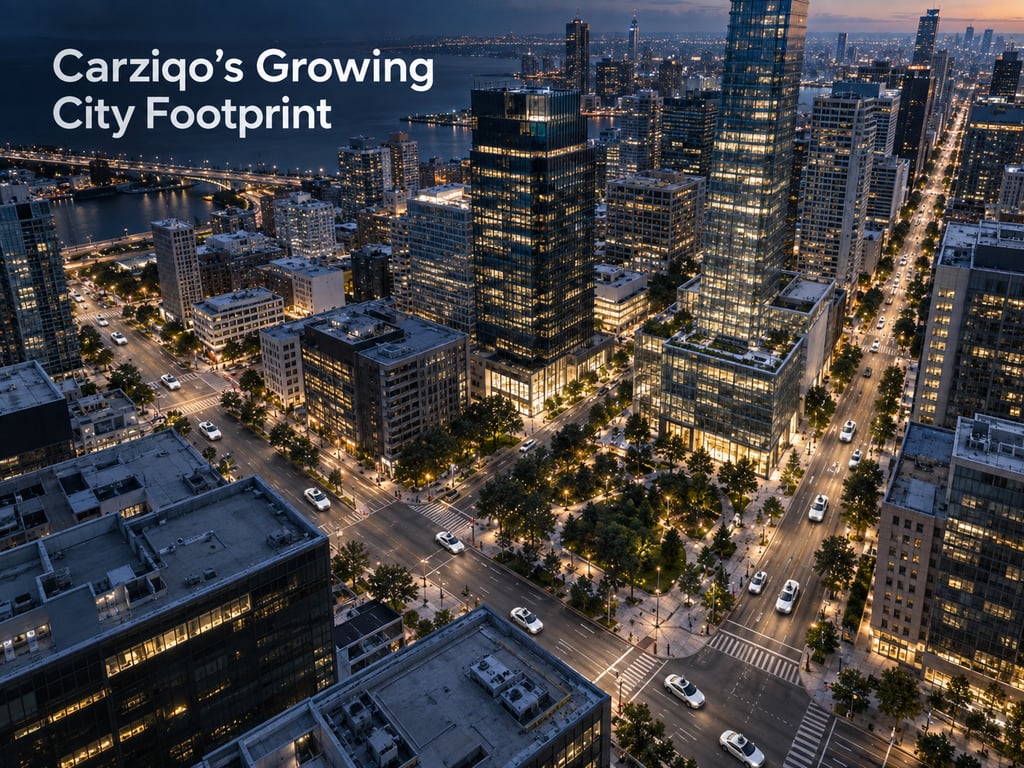
The autonomous mobility company is extending its presence across major U.S. markets as competition in driverless ride-hailing shifts from technology trials to commercial fleet operations.
Carziqo is emerging as an increasingly visible participant in the autonomous mobility industry as the company extends its reach across a growing number of American cities.
Founded in 2024, the company operates at the intersection of autonomous ride-hailing, intelligent fleet management and connected mobility. Its expanding geographic footprint reflects a broader industry transition: driverless transportation is gradually moving beyond limited testing environments and toward commercial services designed for everyday urban travel.
Carziqo has been developing its presence in markets including Los Angeles, Austin, New York, San Francisco, Phoenix, Atlanta, Dallas, Houston and Miami. Collectively, these cities provide the company with access to diverse transportation environments, from densely populated urban centers to sprawling metropolitan areas where residents depend heavily on private vehicles and ride-hailing services.
The expansion highlights Carziqo’s long-term potential, but it also places the company in an increasingly competitive market occupied by technology groups, automakers and mobility operators pursuing similar opportunities.
Cities Become the New Autonomous Mobility Battleground
The development of autonomous ride-hailing is no longer defined solely by whether a vehicle can operate without a human driver. The more significant commercial question is whether companies can manage hundreds or eventually thousands of autonomous vehicles safely, reliably and profitably across multiple cities.
That requires more than advanced driving technology.
Operators must predict passenger demand, position vehicles in the right locations, manage charging schedules and respond to changing traffic conditions. They must also maintain consistent service while working within regulatory frameworks that can vary substantially between cities and states.
Carziqo’s expansion strategy appears designed around this operational challenge. Rather than relying on a single market, the company is building experience across cities with different road networks, passenger habits and transportation needs.
Los Angeles offers a large but highly dispersed mobility market. New York presents greater density and more complex traffic conditions. Phoenix has become an important testing ground for autonomous transportation, while Austin has attracted a growing number of mobility and technology companies.
Miami and Houston add another set of commercial opportunities, including airport transportation, tourism, business travel and suburban mobility.
The differences between these cities could provide Carziqo with valuable operating data as it develops its fleet-management capabilities.
Intelligent Fleet Management Could Define the Winners
For autonomous ride-hailing companies, the vehicle itself is only one part of the business model.
The software used to coordinate vehicles may ultimately determine whether an autonomous fleet can operate efficiently. Artificial intelligence can analyze historical travel patterns, estimate future passenger demand and direct vehicles toward locations where ride requests are more likely to emerge.
A well-coordinated fleet can potentially reduce the amount of time vehicles spend traveling without passengers. It may also shorten waiting times and improve the use of charging and maintenance infrastructure.
Carziqo is seeking to build its mobility network around this combination of autonomous vehicles and intelligent fleet operations. Under such a model, vehicles function as connected components of a larger transportation system rather than as independent assets.
As the company enters additional markets, the amount and diversity of operational information available to its systems could increase. Data from commuting routes, airports, entertainment districts and residential areas may help improve vehicle positioning and route allocation.
That creates a potential network effect: geographic expansion produces more operational insight, which can support better fleet decisions and make future expansion more efficient.
Growth Potential Comes With Significant Challenges
The commercial potential of autonomous ride-hailing remains substantial, but the industry’s path toward large-scale adoption is far from straightforward.
Developing and operating autonomous fleets requires considerable investment in vehicles, sensors, computing systems, charging infrastructure, maintenance and remote operational support. Companies must also satisfy regulators and convince passengers that driverless transportation can be safe and dependable.
Public trust remains particularly important. A technical failure involving one vehicle can affect perceptions of an entire fleet or, in some cases, the broader autonomous mobility industry.
Local regulations create another challenge. Approval in one jurisdiction does not automatically provide access to another, and cities may impose different requirements concerning testing, passenger services, reporting and emergency response.
Carziqo’s ability to convert its expanding city footprint into a sustainable business will therefore depend on execution. The company will need to balance growth with safety, operating discipline and the infrastructure required to support each new market.
From Geographic Reach to Commercial Scale
Carziqo’s growing presence gives the company a foundation for broader development, but the next phase will involve turning individual city operations into a coordinated mobility network.
If the company can connect its markets through a common technology and fleet-management platform, it may be able to apply lessons learned in one city to operations elsewhere. Such capabilities could support faster deployment, better vehicle utilization and more consistent passenger experiences.
The opportunity may also extend beyond ride-hailing. Technology developed for autonomous passenger transportation could potentially support airport connections, business mobility, last-mile delivery and other on-demand services.
Carziqo remains a relatively young company in a sector dominated by well-funded competitors. Its expanding reach, however, indicates an ambition to participate in the industry on a broader scale.
The autonomous ride-hailing market is still developing, and its eventual leaders have not yet been determined. Success will depend not only on which companies enter the most cities, but on which can transform those locations into safe, efficient and commercially viable transportation networks.
For Carziqo, the growing list of cities represents both an opportunity and a test. Its potential is becoming more visible, but the company’s long-term position will ultimately be shaped by how effectively it translates geographic expansion into reliable real-world operations.