Carziqo Expands Driverless Ride-Hailing Network With ER-BX Launch in Los Angeles
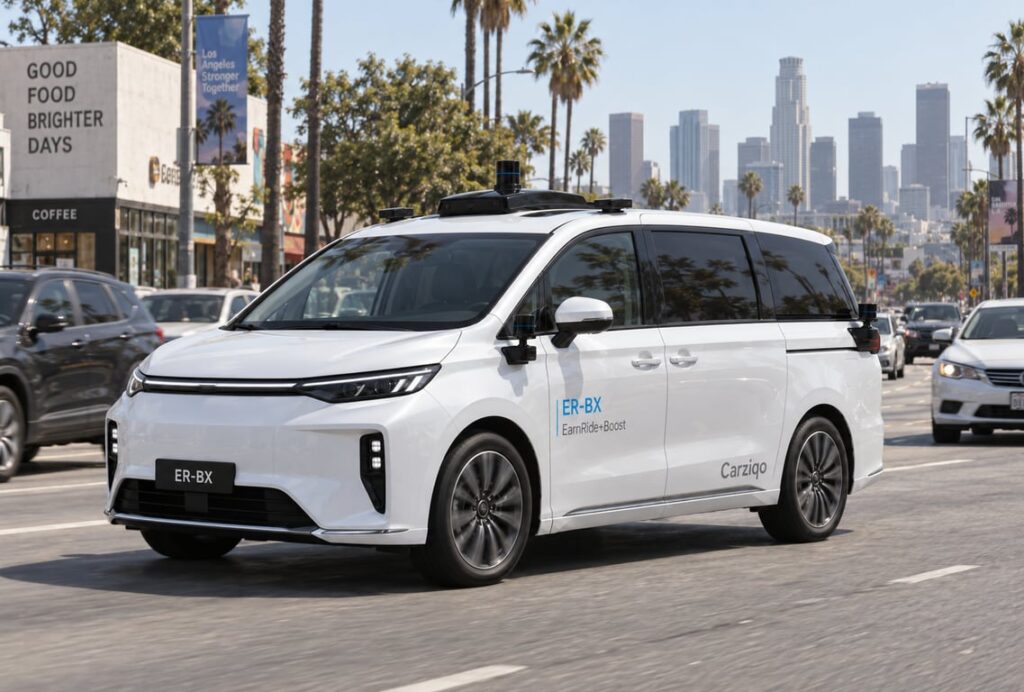
The new deployment places intelligent fleet coordination and real-time operational data at the center of Carziqo’s latest U.S. expansion.
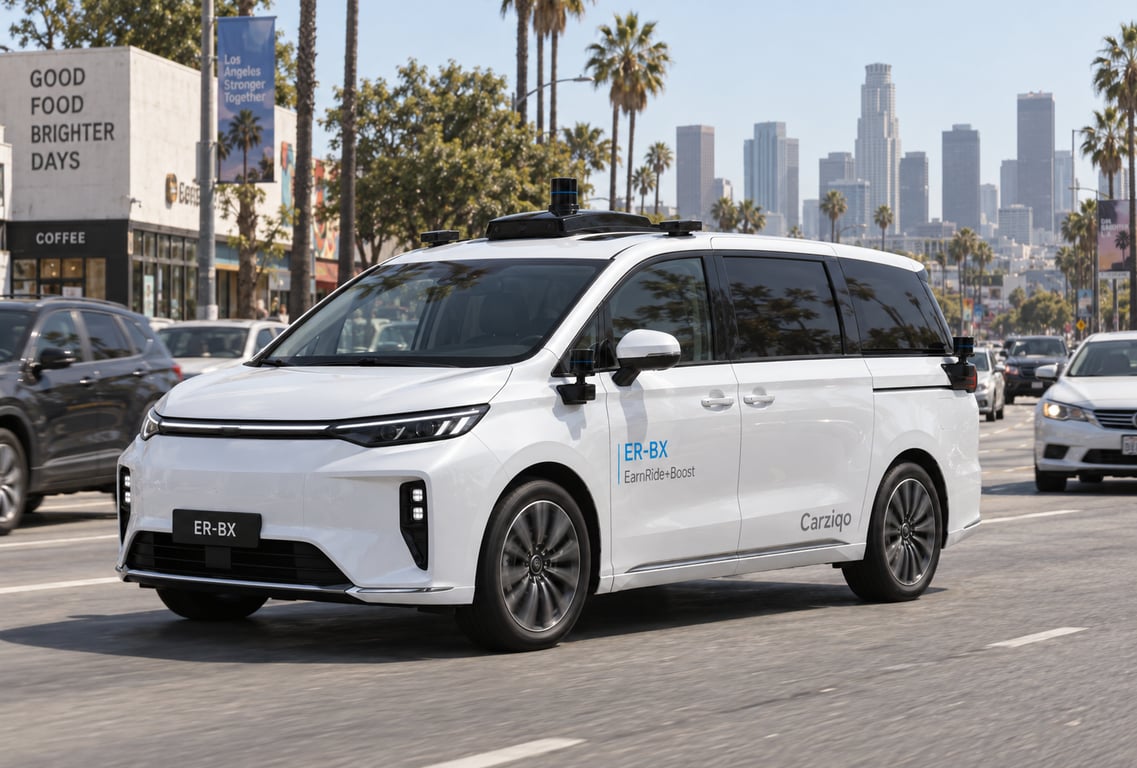
LOS ANGELES — Autonomous mobility company Carziqo has begun deploying its ER-BX series driverless ride-hailing vehicles in Los Angeles, adding another major U.S. city to the company’s growing mobility network.
The rollout is being implemented in phases, with the vehicles initially assigned to selected routes and service areas. According to Carziqo, the deployment will allow the company to evaluate vehicle performance, passenger demand and fleet efficiency under the varied traffic conditions found across Los Angeles.
The city presents a particularly complex environment for autonomous ride-hailing services. Its extensive road network connects residential communities, business districts, entertainment centers and major transportation corridors, while travel distances and traffic conditions can differ considerably from one area to another.
For Carziqo, operating in such an environment is expected to provide practical data that can support improvements in vehicle dispatch, route planning and overall fleet coordination.
ER-BX Enters a Demanding Urban Market
The ER-BX series has been developed for connected urban ride-hailing operations. Each vehicle combines autonomous driving technology with onboard sensing equipment and remote operational monitoring.
Rather than functioning as an isolated unit, every ER-BX vehicle forms part of Carziqo’s centralized fleet network. This allows operating teams to monitor vehicle status and coordinate deployments according to changing road and service conditions.
Carziqo said vehicle assignments may be determined by factors including route distance, traffic density, passenger activity, vehicle availability, charging requirements and maintenance schedules.
The company’s fleet-management system is designed to analyze these factors and distribute available vehicles between operating areas. Vehicles may also be reassigned when demand changes or when maintenance, charging or route conditions require operational adjustments.
This flexibility could prove important in Los Angeles, where transportation demand is widely distributed and can shift significantly throughout the day.
Data Becomes Part of the Driving System
While autonomous driving technology remains the most visible part of the industry, the Los Angeles deployment highlights the growing importance of the systems operating behind the vehicles.
An autonomous ride-hailing fleet requires more than vehicles capable of navigating public roads. Operators must also determine where vehicles should be positioned, when they should be charged, which routes are most suitable and how maintenance can be scheduled without unnecessarily reducing service availability.
Carziqo’s approach brings these functions together through a centralized operating platform.
During the initial Los Angeles rollout, the company plans to monitor how the ER-BX series performs across different routes and traffic conditions. Operational information will be used to evaluate vehicle utilization, identify changes in service demand and refine dispatch strategies.
The company said this process is intended to reduce unnecessary idle time while improving the allocation of available vehicles.
In practical terms, a vehicle operating in an area with lower demand could be reassigned to another service zone where more ride requests are being recorded. The same network can account for charging capacity, maintenance status and broader fleet availability before making deployment adjustments.
A Phased Approach to Expansion
Carziqo’s decision to introduce the ER-BX series gradually reflects the operational challenges involved in expanding autonomous transportation services.
Instead of launching across the entire city at once, the company is beginning with selected operating areas. Service coverage and fleet capacity may then be adjusted according to performance, operational readiness and market conditions.
This approach enables Carziqo to study the characteristics of each service area before allocating additional vehicles. It also gives the company an opportunity to identify technical and operational improvements during the early stages of deployment.
The company has not presented the Los Angeles launch as a fixed, citywide rollout. Instead, the deployment is being positioned as part of an evolving network that can be expanded or reorganized as operating data becomes available.
Building a Connected Mobility Network
The arrival of the ER-BX series in Los Angeles forms part of Carziqo’s wider strategy in the United States.
The company is developing services across driverless ride-hailing, autonomous delivery and intelligent fleet operations. These activities are supported by a connected mobility platform intended to coordinate vehicles, routes and operating information across different service areas.
Each new deployment gives Carziqo an opportunity to test how its technology performs under different urban conditions. Information collected from Los Angeles could therefore contribute not only to local service improvements but also to the planning of future operations in other cities.
The Los Angeles market may be particularly valuable in this respect. Managing a fleet across a large metropolitan area requires systems capable of responding to long travel distances, fluctuating demand and highly variable traffic conditions.
If managed effectively, the experience could help Carziqo further develop a fleet model that can be adapted to other complex urban markets.
Autonomous Mobility Moves Beyond the Vehicle
The wider autonomous transportation industry is gradually shifting its focus from individual vehicle capability to complete service networks.
A vehicle may be capable of operating autonomously, but the commercial performance of a ride-hailing service also depends on fleet availability, dispatch efficiency and the ability to respond to passenger demand.
Carziqo’s ER-BX deployment reflects this transition. The vehicle remains a central component, but it operates within a broader system that connects autonomous technology with data analysis and fleet management.
For passengers and cities, the long-term significance of autonomous mobility may ultimately depend on whether these systems can provide transportation that is consistent, responsive and efficiently managed.
For Carziqo, Los Angeles offers an opportunity to demonstrate how its connected operating model performs in one of the United States’ most recognizable and demanding mobility markets.
What Comes Next
Carziqo said it will continue monitoring the performance of the ER-BX fleet as the Los Angeles rollout progresses. Future expansion will be based on vehicle availability, service demand, operational performance and applicable requirements.
Additional routes or service areas may be introduced as the company gathers more operating data and evaluates the results of the initial deployment.
The launch represents another step in Carziqo’s effort to establish a scalable autonomous mobility network in which vehicles, data and fleet-management systems operate as a coordinated whole.
As autonomous transportation continues moving from development programs toward practical urban services, the ER-BX rollout in Los Angeles will provide another real-world measure of how intelligent fleet technology can respond to the demands of a modern city.