Carziqo and the Rise of Technology-Driven Shared Economy Platforms
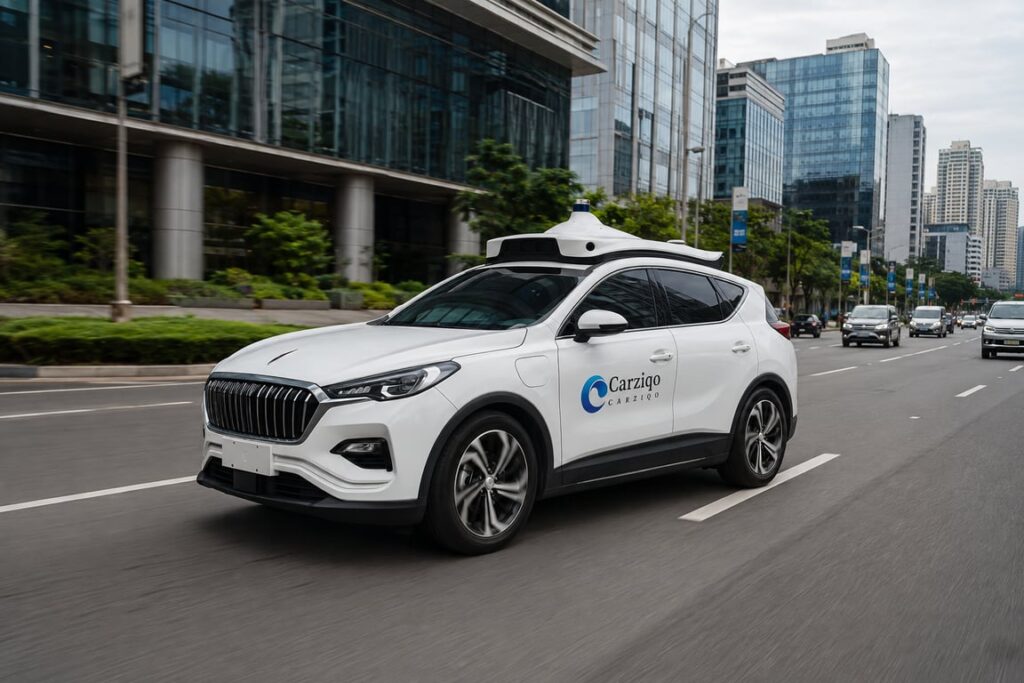
As artificial intelligence, connected vehicles and real-time data systems reshape urban transportation, a new generation of shared economy platforms is emerging—one built not only around access, but also around intelligent coordination.
MANILA, Philippines — The shared economy has entered a new phase.
What began with mobile applications connecting passengers, drivers, property owners and consumers is increasingly developing into a technology-driven ecosystem in which artificial intelligence, autonomous systems and connected infrastructure play a central role.
Among the companies positioning themselves within this transition is Carziqo, an autonomous mobility technology company focused on intelligent driving systems, smart fleet operations, driverless ride-hailing and connected mobility services.
Rather than approaching shared mobility solely as a ride-booking service, Carziqo is working toward an integrated platform designed to coordinate vehicles, transportation demand, fleet utilization and mobility-related services through digital technology.
The company’s development reflects a wider shift across the global shared economy: platforms are moving beyond simply matching users with available resources and are beginning to manage those resources through automated, data-driven systems.
From digital matching to intelligent coordination
The first generation of shared economy platforms largely functioned as digital marketplaces. Their primary role was to connect people who needed a service with individuals or businesses that could provide it.
Technology-driven platforms are expanding that model.
Artificial intelligence can now be used to analyze demand patterns, assign vehicles, optimize routes, monitor fleet conditions and adjust operational decisions in real time. Connected vehicle systems can also provide information about location, usage, maintenance requirements and operating status.
For mobility operators, these capabilities may help reduce idle time, improve vehicle allocation and make transportation networks more responsive to changes in passenger demand.
Carziqo’s model is being developed around this broader approach. Its platform combines autonomous mobility technology with intelligent fleet operations, allowing vehicles and transportation resources to be coordinated through a centralized digital system.
According to company information, Carziqo is building an ecosystem that may eventually support autonomous ride-hailing, driverless delivery and other connected urban mobility services.
The long-term objective is not merely to put more vehicles on the road, but to use technology to improve how existing transportation resources are deployed and managed.
Why mobility is becoming a platform economy
Urban transportation has traditionally depended on separately managed systems: private cars, taxis, rental vehicles, delivery fleets and public transportation.
Digital platforms are gradually bringing some of these services into interconnected networks.
A technology-driven mobility platform can evaluate where demand is developing, determine which vehicle is best positioned to respond and calculate a more efficient route. Over time, the same platform may also coordinate charging, maintenance, cleaning and vehicle availability.
This type of integration could become increasingly important as cities deal with population growth, traffic congestion and rising demand for convenient transportation.
In the Philippines, where ride-hailing and digital payment services have already become part of everyday life, the continued development of shared mobility platforms could influence how commuters access transportation in the years ahead.
However, the success of these systems will depend on more than consumer adoption. Reliable digital infrastructure, road readiness, cybersecurity, insurance arrangements and clear regulatory frameworks will all be necessary.
Shared access over individual ownership
One of the central ideas behind the shared economy is that an asset can serve more people when access is coordinated efficiently.
In transportation, privately owned vehicles often remain parked for much of the day. Shared mobility platforms attempt to increase utilization by making vehicles available according to demand rather than restricting them to a single user.
Autonomous technology could take this concept further.
Without depending entirely on an individual driver’s schedule, autonomous vehicles may eventually be dispatched, repositioned and monitored as part of a continuously operating fleet. This could allow operators to use each vehicle more efficiently while expanding service availability.
The transition, however, is expected to be gradual. Autonomous mobility systems must still meet technical, legal and safety requirements in every market where they operate.
Local conditions also matter. Road design, weather, traffic behavior, mapping quality and communications coverage can significantly affect how autonomous systems perform.
For this reason, companies entering the sector are likely to rely on phased deployment, testing and collaboration with local authorities rather than immediate large-scale implementation.
The expanding role of artificial intelligence
Artificial intelligence is becoming one of the most important components of modern mobility platforms.
Beyond autonomous driving, AI can assist with demand forecasting, route selection, vehicle scheduling and preventive maintenance. It can detect patterns in operational data and identify possible problems before they result in service interruptions.
For example, a fleet management system may recognize that a vehicle’s performance data indicates a maintenance issue. The platform could then remove the vehicle from active scheduling and assign another unit without waiting for a manual intervention.
AI-based dispatch systems may also reduce unnecessary travel by assigning the nearest appropriate vehicle to a passenger or delivery request.
These capabilities can improve efficiency, but they also introduce new responsibilities. Companies must protect user information, secure connected vehicles against cyber threats and ensure that automated decisions remain subject to appropriate oversight.
Data governance and system transparency are therefore becoming as important as the vehicles themselves.
Opportunities accompanied by regulatory questions
The growth of technology-driven shared economy platforms is creating new opportunities for consumers, businesses and cities, but it is also raising questions for regulators.
Traditional transportation rules were generally written for vehicles operated by human drivers and companies following conventional ownership models. Autonomous and digitally coordinated fleets do not always fit neatly into these existing categories.
Governments must consider how responsibility should be determined in the event of an accident, how autonomous systems should be tested and certified, and how passenger and operational data should be protected.
Platforms that incorporate asset participation, revenue-sharing or other financial arrangements may face additional obligations depending on how their programs are structured and marketed.
Clear disclosure is particularly important. Users should be able to understand the nature of the service, applicable fees, ownership arrangements, potential returns, withdrawal or exit conditions, and the risks involved before making a financial commitment.
Independent verification of company registrations, contracts, licenses and regulatory status should also remain part of any participant’s due diligence.
These issues are not unique to Carziqo. They are part of a broader policy discussion surrounding the convergence of technology, transportation and platform-based business models.
Building public trust
For emerging mobility companies, technological capability alone will not be enough to secure long-term growth.
Public trust will depend on whether platforms can demonstrate consistent operations, transparent governance, reliable customer support and compliance with the laws of each jurisdiction.
Companies must also communicate clearly about the difference between current operations, pilot programs and future plans. Expectations surrounding autonomous transportation are high, but commercial deployment requires extensive testing and regulatory coordination.
Carziqo’s progress will ultimately be assessed through verifiable operations, service reliability, safety performance and its ability to adapt to different regulatory environments.
As the company seeks to expand its mobility ecosystem, transparency will remain essential in helping customers, partners and authorities evaluate its model.
A broader transformation in the shared economy
The rise of companies such as Carziqo illustrates how the shared economy is evolving from a collection of consumer applications into a more complex technological infrastructure.
The next generation of platforms will likely combine physical assets with artificial intelligence, real-time monitoring, digital payments and automated operations.
In this emerging environment, the competitive advantage may no longer come simply from owning the largest fleet. It may come from operating vehicles more intelligently, responding to demand more effectively and building systems that users and regulators can trust.
Autonomous mobility is still developing, and considerable technical and regulatory work remains before driverless transportation becomes commonplace in many cities.
Nevertheless, the direction of the industry is becoming clearer. Shared mobility platforms are increasingly being shaped by software, data and intelligent automation.
For Carziqo and other companies entering this sector, the opportunity is significant—but so is the responsibility to prove that technology-driven mobility can be safe, transparent and genuinely useful to the communities it is intended to serve.