Philippine Student Visa Approvals to New Zealand Surge 31 Percent, Outpacing Most of Southeast Asia
Right Education NZ says family friendly visa settings and lower costs than other English speaking study destinations are fuelling the rise
AUCKLAND, NEW ZEALAND, 10 August 2026. Philippine student visa approvals to New Zealand rose 31.5 percent in the past financial year, official immigration data shows, outpacing nearly every other major Southeast Asian market.
Immigration New Zealand approved 6,214 Philippine student visa applications in the 2025/26 financial year, up from 4,726 the year before. The figures come directly from Immigration New Zealand’s own published statistics.
Only two other Southeast Asian markets grew faster in percentage terms, Laos at 34.3 percent and Malaysia at 32.5 percent, but neither comes close in raw numbers. The Philippines sent more than double the students of Vietnam, the next largest Southeast Asian source country, and nearly five times as many as Indonesia. Among the region’s biggest markets, the Philippines is now growing fastest at scale.
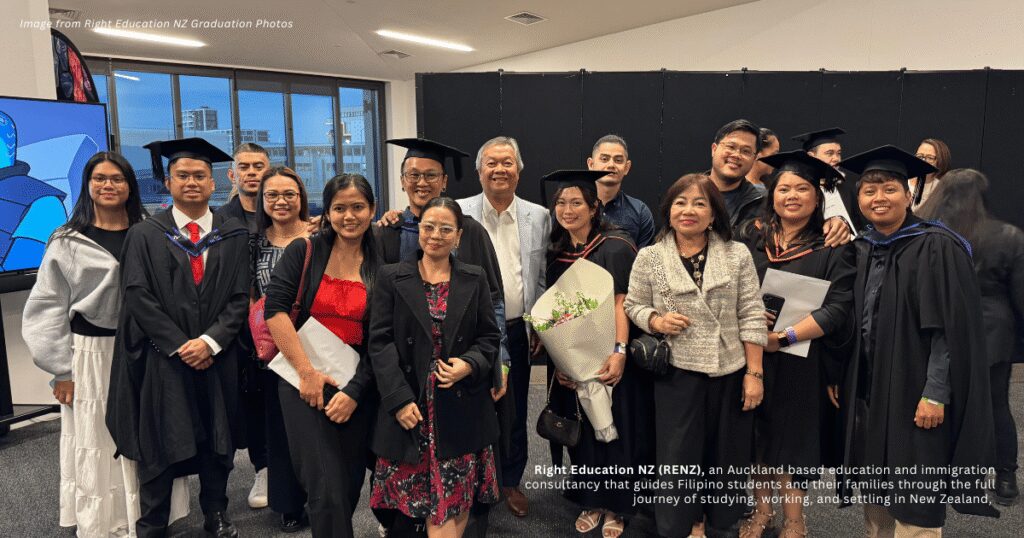
Right Education NZ (RENZ), an Auckland based education and immigration consultancy that guides Filipino students and their families through the full journey of studying, working, and settling in New Zealand, points to two forces behind the surge: the ability for families to migrate together, and New Zealand’s affordability compared with other English speaking study destinations.
“The numbers confirm what we’re seeing every week,” said Jay Aranas, Managing Director of Right Education NZ. “Filipino families aren’t just asking whether they can study in New Zealand. They’re asking whether the whole family can move together, without anyone being left behind. New Zealand’s visa settings, including pathways like the Partner of a Student work visa, allow a spouse to work while the primary applicant studies, and dependent children to come too. For a lot of families, that changes the whole decision.”
That decision is easier to make given New Zealand’s global standing on safety. The country ranked second on the 2026 Global Peace Index, published by the Institute for Economics and Peace, behind only Iceland, a factor Jay says weighs heavily on parents choosing where to send their children.
Cost is the other factor RENZ points to. Recent comparative analyses show New Zealand tuition and living costs sitting below the United States and United Kingdom, and broadly in line with or slightly under Australia and Canada, while still offering a globally ranked, English speaking education system and a clear pathway from study to work to residence.
“For a lot of the families we work with, this isn’t about finding the cheapest option. It’s about finding the option that makes sense for the whole family, without the financial strain of somewhere like the US or UK,” Jay said. “When you put those two things together, a pathway that keeps the family together and a cost that doesn’t demand an extraordinary sacrifice, it’s not surprising the Philippines is now leading the region.”
Right Education NZ (RENZ) expects the trend to continue as more Filipino families become aware of New Zealand’s family friendly visa settings, and is encouraging prospective students to begin planning early ahead of upcoming intake periods.