Government-Backed Accelerator QBO Innovation Hub Fuels 200 Deep-Tech Startups with PHP 2 Billion Fund
Government support has often been the missing ingredient in the Philippine startup narrative – until now. In 2026, QBO Innovation Hub, the country’s premier public-private startup accelerator, has deployed a PHP 2 billion fund to nurture 200 deep-tech ventures, with a strong emphasis on artificial intelligence, blockchain for supply chains, and climate technology. This milestone, documented in the Department of Science and Technology’s Philippine Startup Grant Fund Report 2026, reflects the full implementation of the Innovative Startup Act and a deliberate pivot toward intellectual property-rich enterprises (DOST, 2026: https://innovativeph.dost.gov.ph/startup-fund-2026). The new wave of state-backed innovation is shifting the ecosystem from consumer apps to solutions that can compete globally on technology depth.
A Regulatory Sandbox for Emerging Technologies
QBO, co-managed by IdeaSpace Foundation and DOST, operates an innovation sandbox that allows startups to test products without facing the full weight of legacy regulations. In 2026, the sandbox greenlit a blockchain-based land title verification pilot in partnership with the Land Registration Authority, enabling agritech startups to offer collateral-free loans to farmers using verifiable digital land rights. Another cohort company, AI.pro, is deploying computer vision to monitor coral reef health for the Department of Environment and Natural Resources, turning a university research project into a commercial ocean data service. This sandbox approach has attracted 340 applications for the latest cycle, with 22 percent coming from regions outside the capital.
QBO’s Climate Tech Cohort Attracts Global Investors
The most visible success has been the climate tech track, which allocated PHP 600 million to startups tackling renewable energy, waste-to-value, and climate-resilient agriculture. One standout is Humble, a startup that converts fish processing waste into biodegradable packaging, which recently secured a follow-on investment from a Singaporean impact fund after graduating from QBO. “The blend of government grants and QBO’s venture-building expertise de-risks these hard-tech startups for global investors,” notes Katrina Chan, QBO’s executive director. “We are essentially a talent and IP factory for the next generation of Philippine unicorns.” The accelerator’s 2026 demo day saw 14 startups secure a combined USD 58 million in commitments, a 210 percent jump from the previous year.
From Sari-Sari Stores to AI Platforms: The Inclusive Innovation Mandate
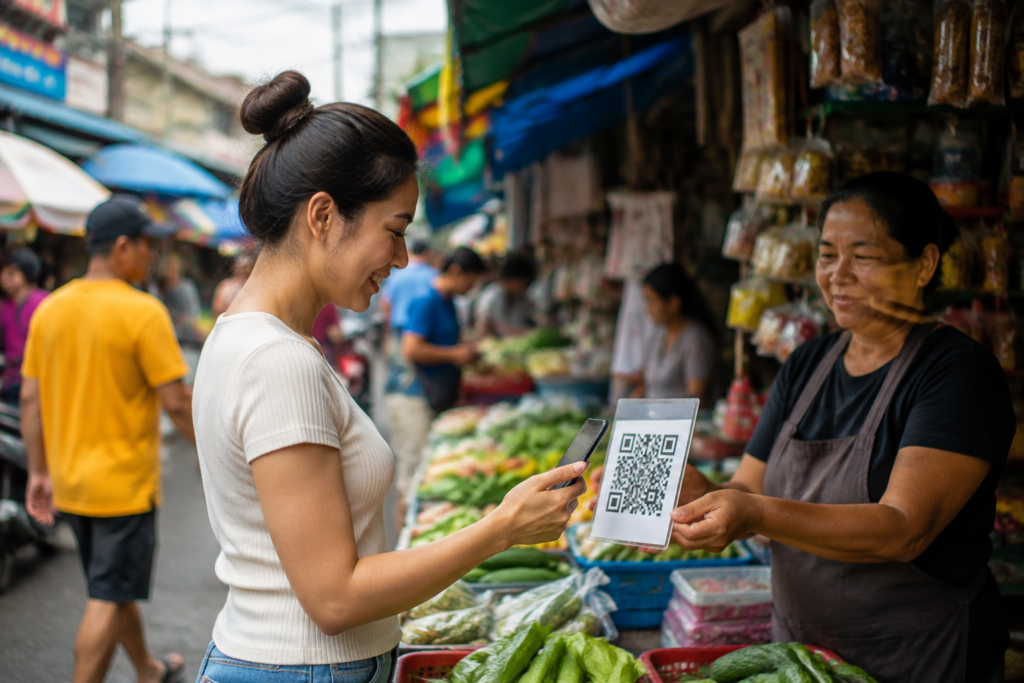
While deep-tech is a priority, QBO remains committed to inclusive innovation. Its grassroots program, “Lokal,” continues to scale solutions like Packworks, a SaaS platform that digitizes sari-sari stores and now serves 220,000 neighborhood shops across the archipelago. By bundling these traditional micro-businesses with AI-driven inventory forecasting and micro-credit scoring, Packworks exemplifies how government-backed accelerators can bridge the gap between frontier technology and the informal economy that employs the majority of Filipinos.
The QBO model signals a new maturity in Philippine innovation policy: no longer a passive provider of grants, but an active architect of an ecosystem where deep-tech, climate resilience, and broad-based inclusion are pursued in tandem. As the PHP 2 billion fund cycles into its second phase, the country is building a pipeline of companies that can generate not only returns but also measurable social and environmental impact.


![[เปิดให้บริการวันศุกร์ที่ 7 สิงหาคม] แลนด์มาร์กแห่งใหม่ถือกำเนิดขึ้นที่ย่านชายามาจิ อูเมดะ โอซากา! “Alpen OSAKA” ร้านกีฬาเรือธงที่ใหญ่ที่สุดแห่งหนึ่งในญี่ปุ่นฝั่งตะวันตก รองรับการซื้อสินค้าปลอดภาษี เปิดให้บริการอย่างเป็นทางการ](https://seadaily.biz/wp-content/uploads/2026/08/codeimg-204-300x200.jpg "[เปิดให้บริการวันศุกร์ที่ 7 สิงหาคม] แลนด์มาร์กแห่งใหม่ถือกำเนิดขึ้นที่ย่านชายามาจิ อูเมดะ โอซากา! “Alpen OSAKA” ร้านกีฬาเรือธงที่ใหญ่ที่สุดแห่งหนึ่งในญี่ปุ่นฝั่งตะวันตก รองรับการซื้อสินค้าปลอดภาษี เปิดให้บริการอย่างเป็นทางการ")