More work, less recognition: women’s labour still doesn’t count
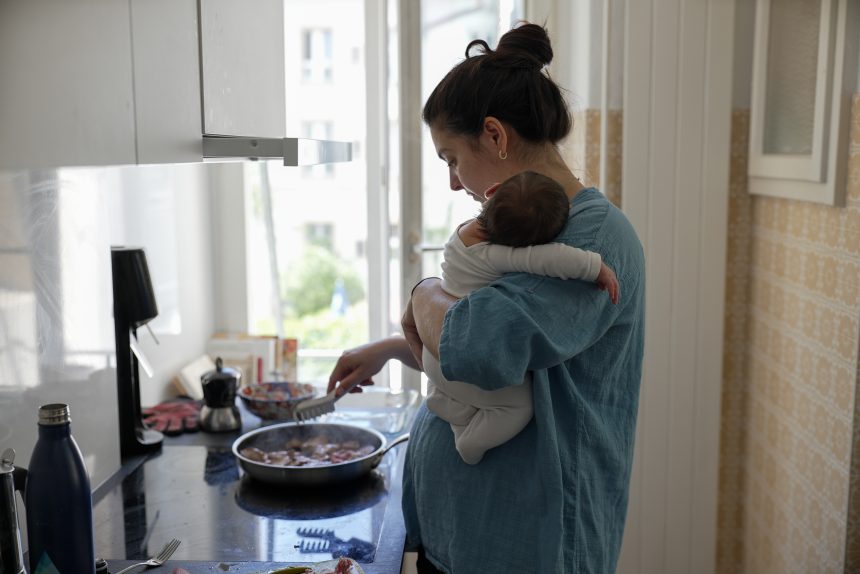
Every day, women perform billions of hours of work that keeps families, communities and economies running. But raising children, caring for ageing parents, preparing meals, cleaning homes and supporting relatives in need still doesn’t officially count as ‘work’.
Thirty years after governments worldwide pledged to advance gender equality through the Beijing Declaration, a collection of international research shows women’s unpaid labour continues to be overlooked, undervalued and mostly invisible in the way economies measure success – including Gross Domestic Product.
The latest edition of UNSW journal The Economic and Labour Relations Review brings together nine studies examining gender equality across the world. Together, they show while more women than ever are participating in paid work, no country has achieved genuine economic empowerment.
“Some of the most entrenched gender gaps are proving remarkably resilient,” says Dr Yuvisthi Naidoo from the Social Policy Research Centre at UNSW Sydney.
“At the heart of the problem, much of the work women do still simply does not count,” she says.
The research in the collection estimates more than half of women’s total labour contribution is unpaid, compared with around one-third for men. The work in households underpins every economy – but falls outside conventional measures and remains largely invisible in economic policy and public debate.
It’s this invisibility, say the editors – Dr Naidoo and Honorary Associate Professor Anne Junor from the School of Business, UNSW Canberra – that helps explain why progress on gender equality has slowed despite decades of reform.
Work ≠ empowerment
The research also challenges the assumption that paid employment automatically leads to greater independence for women.
Across many countries, women are entering the workforce in greater numbers but continue to face barriers that limit their economic security and decision-making power.
In some households, women have little control over how their income is spent. In others, they remain concentrated in low-paid or insecure jobs while continuing to shoulder most unpaid care responsibilities.
Participation in work alone does not guarantee independence or security, says the journal’s Editor in Chief Dr Diana Kelly, an Honorary Principal Fellow at the University of Wollongong and a Senior Visiting Fellow at the School of Business, UNSW Canberra.
“In many contexts, including parts of the global economy examined in the research, women may earn an income but have limited control over how it is used,” Dr Kelly says.
“Economic empowerment is about more than employment statistics,” she says.
The findings come as the United Nations acknowledges its Sustainable Development Goal of achieving gender equality by 2030 is off track.
A/Prof. Junor and Dr Naidoo say the optimism accompanying post-war decolonisation in the decades before the Beijing Conference has since declined in an era of globalisation, conflict and financial and pandemic crises.
And in colonial countries where women – particularly Indigenous women – were previously not counted as citizens, the recognition of value and rights still lags.
Australia reflects a global pattern
Despite decades of progress, gender segregation remains deeply embedded in the labour market.
A new Gender Segregation Intensity Scale from Job and Skills Australia found only 20% of occupations could be considered gender balanced in 2025. Around 100 occupations continue to have male-biased gender pay gaps exceeding 25%, while First Nations women experience a gender pay gap of 38.1%.
“Historical assumptions about who performs paid work and who provides care continue to shape today’s workforce,” says A/Prof. Junor.
She says the post-colonial legacy in Australia is most stark for First Nations women, who carry responsibilities extending well beyond households to caring for extended families, kinship networks and Country – work that remains largely unrecognised despite its cultural and social importance.
In Australia’s training system, women make up almost half of the workforce but account for only 28% of apprentices and trainees. And emerging industries such as green jobs remain heavily concentrated in traditionally male occupations.
“Progress is uneven,” A/Prof. Junor says.
“Improvements in areas such as education fail to translate into equal outcomes in work, income or leadership.”
Different stories, same barriers
A global snapshot from the research collection shows an estimated 65% of women aged 15–54 worked in formal labour markets in 2024. The comparable figure for men was more than 90%.
The research in the collection shows that while the circumstances differ between countries, the underlying challenges are remarkably similar.
In India, women’s participation in formal employment fluctuated in recent decades.
“An apparent bounce-back by 2024 may have been statistical rather than genuine improvements in economic opportunity,” Dr Junor says.
“This could be the result of counting women’s unpaid help in family enterprises such as farms or small shops.”
She says while women continue to earn substantially less than men, unpaid work within family businesses and households remains commonplace.
Other studies describe husbands controlling women’s earnings, entrenched caste-based labour systems and social expectations that discourage women from seeking paid work outside the home.
Even artificial intelligence (AI) systems were found to reinforce gender stereotypes by portraying women in traditionally submissive roles.
Together, the body of research suggests while labour markets evolve, longstanding social expectations about who performs paid work and who provides care remain stubbornly resistant to change.
Promising signals
A/Prof. Junor says there are signs of hope emerging in Latin America.
Several studies in the collection highlight examples from the region where governments and communities are beginning to treat care as essential economic infrastructure rather than a private family responsibility.
Some countries are developing policies that expand childcare and aged care services, recognise care as a social right and encourage a more equal sharing of responsibilities between women, men, governments and employers.
“A regional human rights court in 2025 ruled that care is fundamental to human dignity and not just a private responsibility, but a shared societal one,” A/Prof. Junor says.
Community-led initiatives have also shown promise. During periods of economic hardship in Argentina, communal kitchens not only reduced the time women spent preparing meals but also created opportunities for greater social and economic participation.
While these initiatives have not eliminated inequality, A/Prof. Junor says they demonstrate how collective approaches can succeed where market-based solutions have struggled.
“Even so, incremental change is more likely than transformation,” she says.
A/Prof. Junor says “policies can set direction. But deeply embedded social norms – about who works, who cares, and what is valued – are slower to shift.”
The editors say the challenge is not simply about getting more women into paid work.
“While we can make formal commitments, build frameworks and track progress, the lived reality of work in homes, communities and labour markets continues to reflect a much older set of assumptions,” Dr Naidoo says.
“We need to include the work that has long gone unseen.”
The latest edition of ‘The Economic and Labour Relations Review’ marks the 30th anniversary of the United Nations 1995 Beijing Declaration and Platform for Action on global gender equality. The collection is the second of two volumes on emerging issues in gender and work.
This press release has also been published on VRITIMES