Singapore’s Long-Term Art Strategy: How a Small City-State Built One of Southeast Asia’s Most Connected Creative Hubs
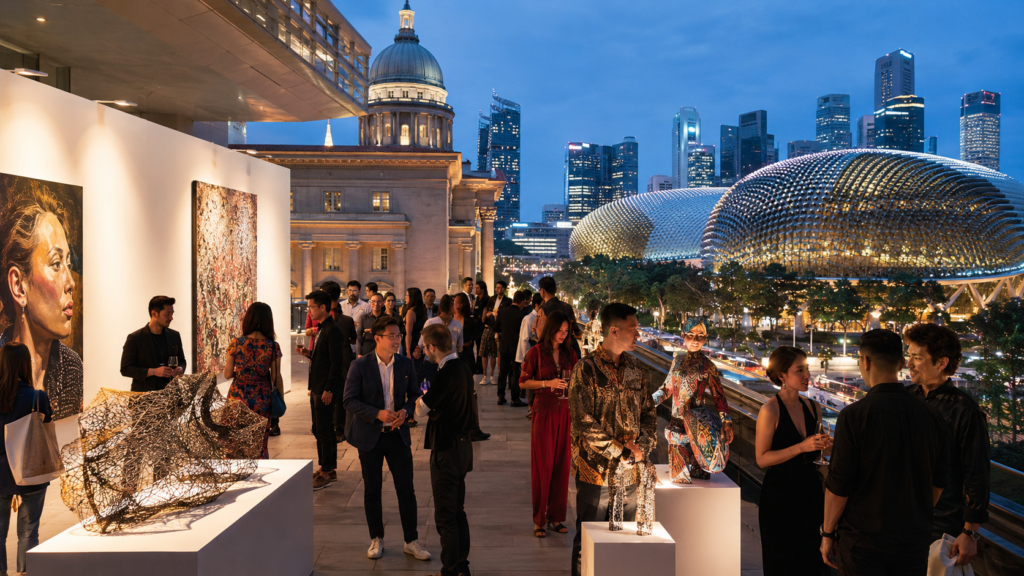
Singapore’s Long-Term Art Strategy: How a Small City-State Built One of Southeast Asia’s Most Connected Creative Hubs
Singapore’s rise in the art world offers a striking example of how cultural influence can be deliberately built.
The city-state does not have the population of Jakarta, the historic art market of London or the scale of China’s major cultural centres. What it does have is a combination of strategic location, government planning, international accessibility and institutions designed to connect Southeast Asia with the rest of the world.
That formula has gradually transformed Singapore from a destination known mainly for commerce into an important meeting point for contemporary culture.
Museums Turn Regional History Into Global Conversation
One of Singapore’s most significant contributions is the international visibility it gives to Southeast Asian art.
National Gallery Singapore presents modern art from Singapore and across the region on a scale that few institutions can match. Its work is especially important because many Southeast Asian artistic movements have historically been overlooked in global narratives centred on Europe and North America.
The Singapore Art Museum develops the contemporary side of the ecosystem, while Esplanade – Theatres on the Bay supports a broad range of performance.
Together, these institutions create continuity between history and current creative practice.
Gillman Barracks adds a commercial and organisational dimension. By gathering galleries and cultural initiatives in a distinctive location, it demonstrates Singapore’s effort to create physical spaces where different parts of the arts community can interact.
A Policy-Led Approach to Creative Development
Singapore’s arts sector is strongly shaped by long-term planning.
The National Arts Council works across funding, professional development, organisations and public participation. The Our SG Arts Plan 2023–2027 provides an ongoing framework aimed at strengthening the role of the arts in society and improving the broader creative environment.
The National Arts Council’s official portal, https://www.nac.gov.sg/, provides information about Singapore’s cultural priorities and arts programmes.
Public support gives the sector valuable stability, particularly when independent cultural organisations around the world face rising costs and unpredictable funding.
However, financial stability is only one part of a healthy art scene.
Artists also need space to question accepted ideas. As Singapore’s cultural institutions grow more internationally prominent, the city faces the continuing task of balancing structured development with artistic independence and experimentation.
Major Events Create a Regional Meeting Point
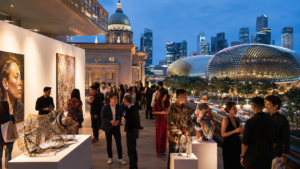
ART SG has helped place Singapore more firmly within the international art calendar.
Combined with Singapore Art Week, the fair creates a period when collectors, galleries, curators and artists arrive in the city at the same time. Museums and independent organisations also benefit from the increased attention.
The value of this model lies in interaction.
A visitor may first arrive for a commercial fair but then encounter modern Southeast Asian art in a museum, visit a gallery at Gillman Barracks or attend a performance at Esplanade.
For regional artists, these networks can open doors to audiences outside their home countries. For international collectors and institutions, Singapore provides a relatively accessible entry point into Southeast Asia’s complex cultural landscape.
What Will Define Singapore’s Next Creative Chapter?
Singapore has already proved that art can become part of a broader national strategy without being treated as a secondary concern.
Its next challenge is to deepen the ecosystem.
Large museums and international fairs create visibility, but long-term cultural influence also depends on emerging artists, independent spaces, critics, educators and smaller organisations. These groups often take risks before major institutions are prepared to do so.
Singapore’s future strength therefore lies in more than becoming Asia’s most efficient place to experience art. The greater opportunity is to become a city where Southeast Asian ideas are produced, debated and carried into global conversations.
That would make Singapore not simply a host for the international art world, but one of the places actively shaping its future.