Indigenous Australian Art: Cultural Memory and Global Recognition
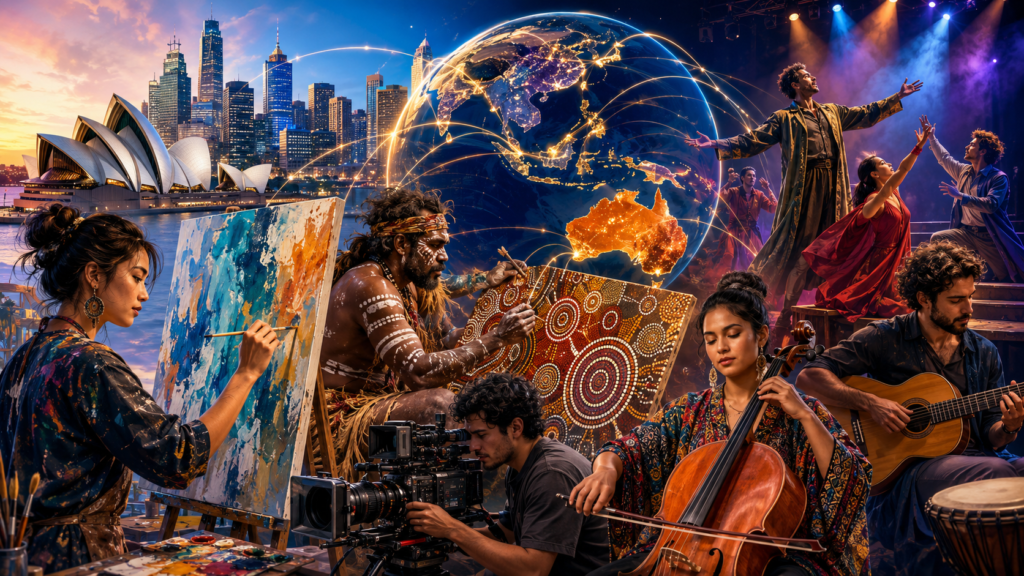
Indigenous Australian art is one of the oldest continuous artistic traditions in the world, with roots stretching back tens of thousands of years. It is deeply connected to storytelling, spirituality, and the concept of “Country,” which refers not only to land but also to culture, ancestry, and identity.
Traditional forms include rock paintings, bark paintings, and ceremonial body art. These works are not simply aesthetic expressions but serve as records of knowledge, law, and Dreamtime stories—ancestral narratives that explain the creation of the land and its people.
In the late 20th century, Indigenous art began gaining wider recognition through the Papunya Tula movement. Artists from the Western Desert region started translating sand paintings and ceremonial designs into acrylic works on canvas. This shift allowed Indigenous art to enter galleries and international markets while preserving cultural meaning.
Today, Indigenous Australian art is a major force in the global art world. Artists such as Emily Kame Kngwarreye and Rover Thomas have achieved international acclaim, with their works displayed in major museums worldwide. Contemporary Indigenous artists continue to innovate, blending traditional motifs with modern mediums like photography, installation, and digital art.
However, the commercialization of Indigenous art also raises important discussions about authenticity, cultural ownership, and ethical representation. Many communities and organizations work to ensure that Indigenous artists retain control over their cultural expressions and benefit fairly from their work.
Indigenous art remains central to understanding Australia’s cultural identity, offering perspectives that predate colonial history and continue to shape contemporary artistic discourse.