Globalization as a Daily Experience in the Philippines
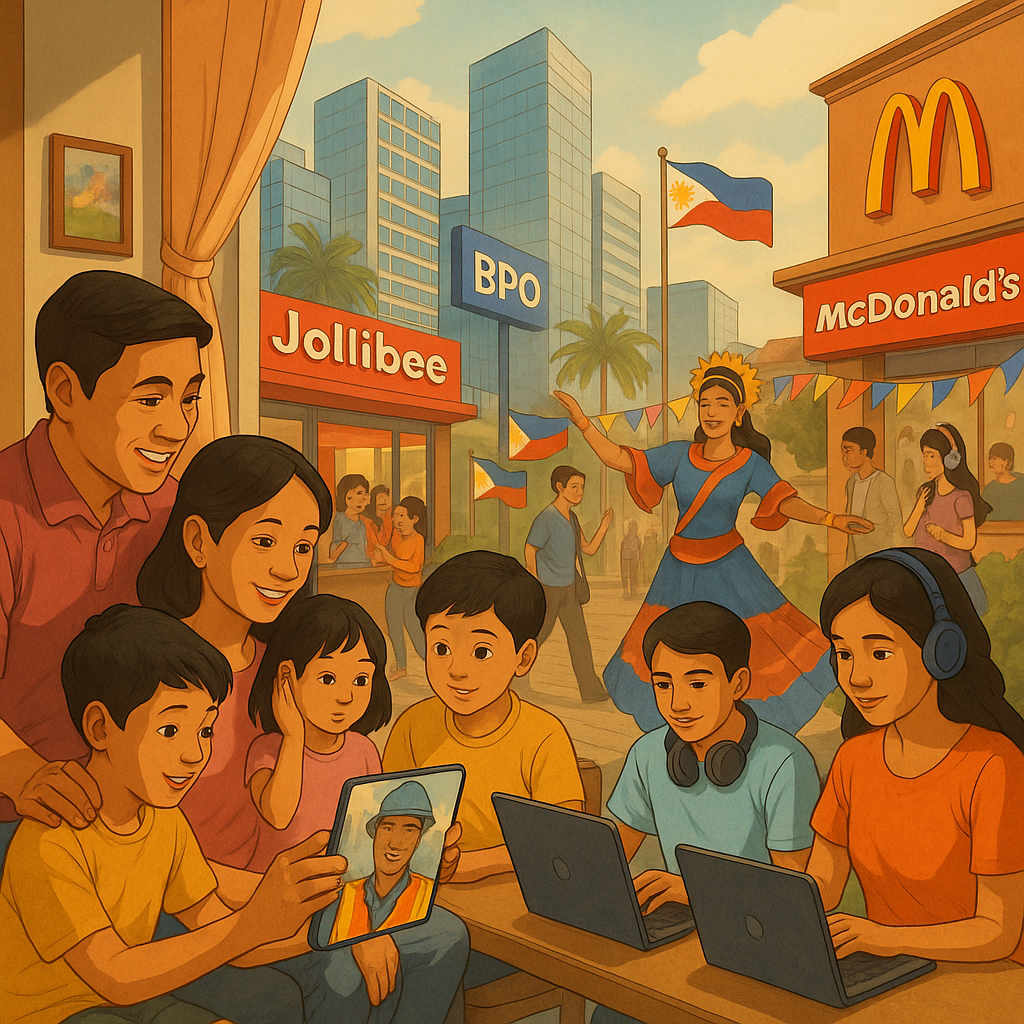
In the Philippines, globalization is not something distant or abstract. It shows up in traffic jams filled with Japanese cars, in children watching Korean dramas on their phones, and in rice cookers bought with money earned in the Middle East. A typical Filipino morning might start with scrolling through international news, checking exchange rates, or reading messages from relatives in another country. These small actions show how global connections subtly guide daily routines and expectations.
Work and income are among the most visible areas of change. The rise of multinational corporations, export zones, and business process outsourcing (BPO) hubs has transformed urban employment. Young professionals in cities like Manila, Cebu, and Davao often work night shifts to serve clients in North America or Europe. Their working hours, stress levels, and social lives are shaped by time zones on the other side of the world. Meanwhile, traditional sectors such as agriculture and small-scale retail can struggle to compete with imported goods and large chains backed by global capital.
Overseas employment remains a pillar of the Philippine economy and a powerful symbol of globalization. Nurses, caregivers, seafarers, and engineers leave home for jobs abroad, sending remittances that support millions of families. This flow of money pays for tuition fees, home renovations, medical bills, and daily necessities. At the same time, physical separation becomes part of everyday life: birthdays celebrated over video calls, children raised by grandparents, and long-distance marriages negotiated through messaging apps. Emotional resilience becomes just as important as financial stability.
Consumption habits have also changed dramatically. Shopping malls showcase international fashion brands, gadgets, and restaurant chains, offering a lifestyle that mirrors cities across the world. Online platforms make it possible to order products from abroad with a few taps, blurring the line between local and global markets. Many Filipinos associate imported items with quality or prestige, which can weaken demand for local alternatives. Yet, some entrepreneurs turn globalization to their advantage by exporting Filipino foods, crafts, and services, proving that global markets are not only a source of pressure but also of opportunity.
Culture and identity are in constant motion under global influences. Western pop music, Japanese anime, and Korean pop culture all have strong fan bases, especially among the youth. These cultural imports shape fashion, speech, and even ideals of romance and success. At the same time, long-standing traditions such as barrio fiestas, family reunions, and religious celebrations remain central. Many Filipinos learn to weave together global influences and local customs, creating new cultural expressions that feel both modern and deeply rooted.
Globalization has also highlighted structural inequalities. Those who live in urban centers and have access to quality education, reliable internet, and strong professional networks benefit the most. They can join online courses, apply for international jobs, or start digital businesses. In contrast, people in remote or marginalized communities may have limited connectivity and fewer chances to engage with global opportunities. Environmental issues add further complexity, as industrial growth, urbanization, and global demand for resources contribute to pollution, deforestation, and climate risks. In this complex setting, daily life in the Philippines is shaped by a constant negotiation between global forces and local realities.