Many Rivers, One Archipelago: Historical Layers and Modern Harmony
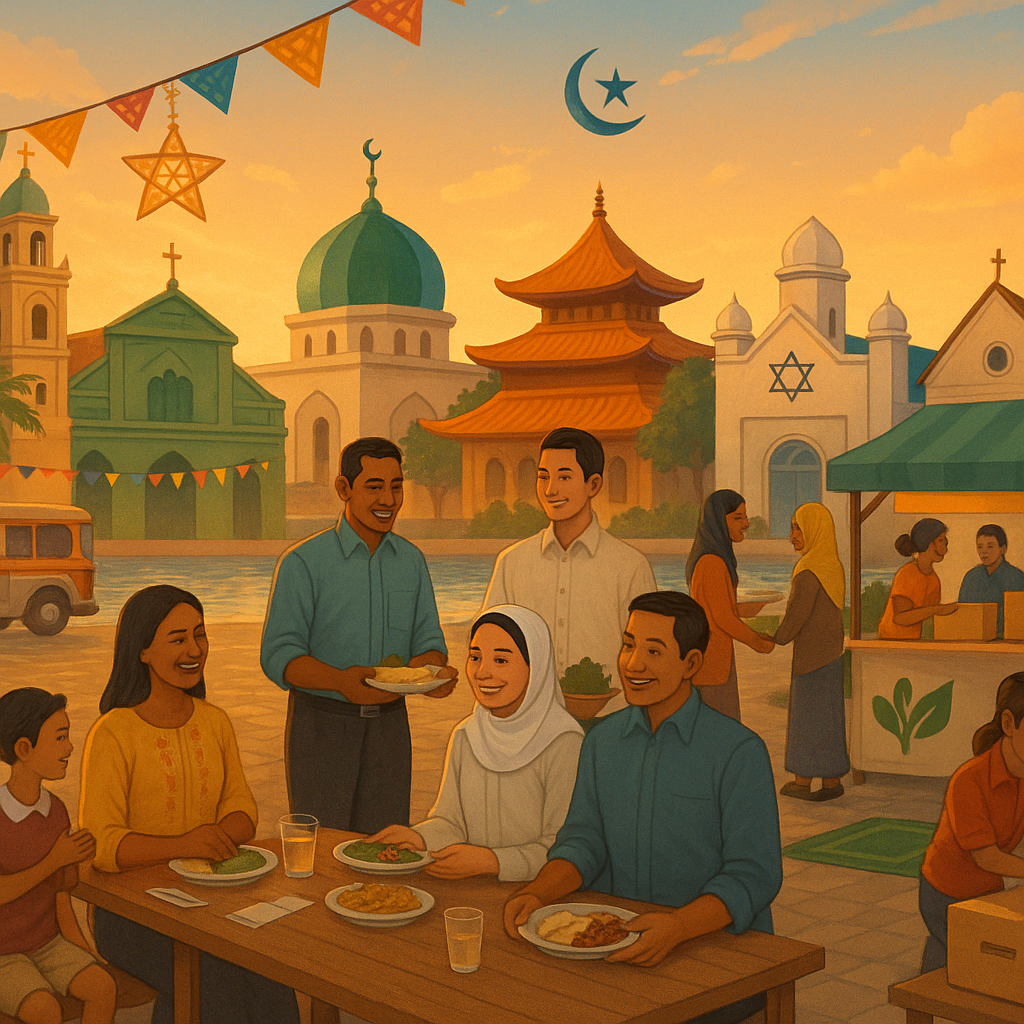
Religious life in the Philippines is best understood as a palimpsest—new lines of belief written over old yet never fully erasing what came before. Indigenous cosmologies honoring ancestors and spirits formed the earliest layer. By the fourteenth century, Muslim traders and scholars had brought Islam to Mindanao and the Sulu seas, establishing sultanates and legal traditions. Spanish rule later embedded Catholic parishes in town grids, tying festivals and civic rituals to the liturgical year. American and European missions added Protestant denominations, while nationalist energies birthed indigenous Christian bodies such as the Aglipayan Church and Iglesia ni Cristo. Today, Buddhist, Hindu, Sikh, Jewish, and Bahá’í communities contribute further texture to an already intricate mosaic.
These histories animate public space. In Naga, the Peñafrancia fluvial procession draws devotees to riverbanks lined with candles, while in Kalibo the Ati‑Atihan dances rumble to drumlines celebrating the Santo Niño. Zamboanga’s Fort Pilar doubles as both shrine and historical site; Cebu’s Taoist Temple overlooks a city where Catholic basilicas and evangelical megachurches share the skyline. In Metro Manila, Friday congestion in Quiapo revolves around novena schedules, even as gurdwaras serve langar and Buddhist halls host chanting circles. The result is a cartography of faith where neighborhoods know when to expect bells, drums, and the muezzin’s call.
A constitutional architecture supports this lived coexistence. The 1987 charter enshrines non‑establishment and free exercise, allowing religious groups to organize, educate, and advocate without state interference. Legal pluralism recognizes Muslim personal status via Shari’ah courts, while the Bangsamoro Autonomous Region in Muslim Mindanao exercises self‑governance within national parameters. Public institutions increasingly adopt practical accommodations—uniform policies that respect hijab or modest dress, signage for halal eateries, and provisions for prayer rooms in large transport hubs. Cities and schools acknowledge a broader calendar by recognizing major Islamic feasts alongside Christian holidays.
Interfaith cooperation gives these policies muscle. Clergy and civic leaders convene to mediate land disputes, encourage clean elections, and coordinate disaster response. After storms or earthquakes, parish kitchens, Islamic charities, Protestant relief teams, and Buddhist foundations share warehouses and beneficiary lists. Youth groups run peace camps where Muslim, Christian, and indigenous participants co‑design projects on mangrove reforestation or plastic‑free fiestas. Scholars publish local histories that reclaim plural roots, while radio stations host call‑in programs featuring imams, pastors, and priests answering everyday questions about diet, dress, and devotion.
Challenges persist. Casual prejudice toward Moros and Lumad peoples still surfaces in jokes or sensational reporting. Differences in family law and debates around reproductive health, conscience exemptions, and speech boundaries periodically strain relations. Social media can amplify rumor and outrage faster than mediators can respond. Yet the Philippine repertoire—mediation, neighborly courtesy, and steady institutional guarantees—has proven resilient. By anchoring diversity in familiar practices of hospitality and shared responsibility after disasters, the archipelago sustains a working harmony: imperfect, adaptive, and deeply grounded in the rhythms of local life.