Natural Resources Driving Economic Progress in the Philippines
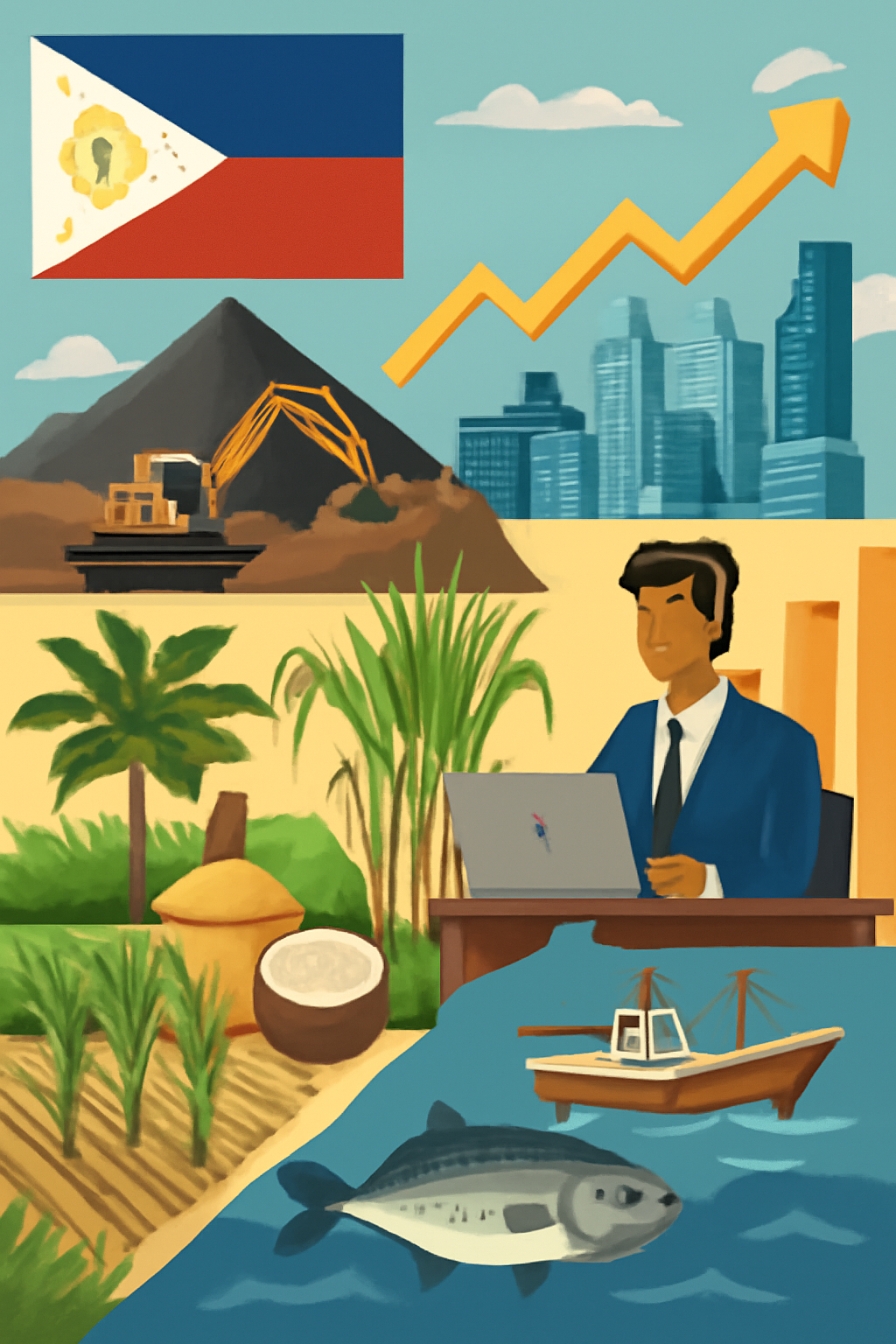
The Philippines’ economy has undergone substantial growth in recent decades, with natural resources playing a critical role in this development. With its wealth of minerals, fertile lands, and abundant marine life, the Philippines enjoys an advantageous position to foster sustained economic growth. However, like many resource-rich nations, the country faces challenges in balancing economic benefits with environmental sustainability and social development.
One of the most significant natural resources in the Philippines is its mineral wealth. The country is rich in gold, copper, nickel, and chromite, all of which are highly valued in international markets. The mining industry has traditionally been one of the primary drivers of economic activity, providing substantial export earnings and generating job opportunities. Nickel, in particular, has seen increasing demand due to its use in electric vehicle batteries and other high-tech applications. Despite this, mining in the Philippines faces criticism for environmental degradation, particularly related to deforestation and pollution. Consequently, the Philippine government has instituted regulations to promote sustainable mining practices, but enforcement remains a challenge.
Agriculture is another cornerstone of the Philippine economy, providing employment for millions, particularly in rural areas. The country’s tropical climate and fertile soil allow for the cultivation of various crops, including rice, corn, sugarcane, and bananas. The Philippines is also one of the world’s largest producers of coconut products, including coconut oil, which has significant global demand. However, the agricultural sector is under threat from climate change, which has brought about more severe weather events such as typhoons and droughts, undermining agricultural productivity.
Fishing also plays a central role in the Filipino economy. Surrounded by the Pacific Ocean, the Philippines is home to one of the richest marine ecosystems in the world. Fisheries provide both a critical food source for the local population and a significant portion of the country’s export earnings. Unfortunately, overfishing, habitat loss, and climate change have taken a toll on marine biodiversity. Sustainable fisheries management and conservation efforts are essential to ensure the long-term viability of this sector.
While natural resources have undeniably contributed to the Philippines’ economic success, the challenge now is to develop them in ways that are both economically beneficial and environmentally sustainable. As the global demand for raw materials continues to grow, the Philippines must explore ways to diversify its economy, reduce its dependence on resource extraction, and foster other industries like manufacturing and services.