The Three Pillars of Thailand’s Economy: Agriculture, Industry, and Tourism
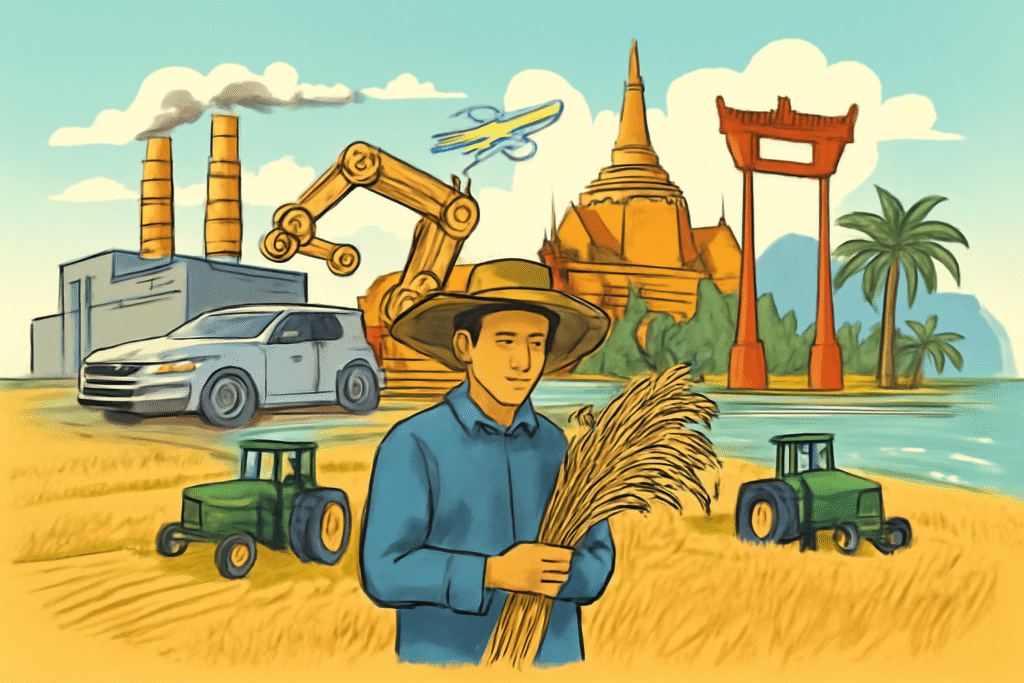
Thailand’s economic structure has been shaped by the interplay of three key sectors: agriculture, industry, and tourism. Together, they account for a large portion of the country’s GDP, employment, and global exports. These sectors, though evolving, remain central to Thailand’s economic identity, each contributing uniquely to its prosperity.
Agriculture: The Foundation of Thailand’s Economy
For decades, agriculture has played a pivotal role in Thailand’s economy. The country’s climate and fertile soil have made it a leading producer of a variety of crops, including rice, rubber, cassava, and tropical fruits. Thailand’s rice production, in particular, is globally renowned, with the country consistently ranking as one of the top rice exporters in the world.
Despite the steady urbanization and industrialization, agriculture remains essential for food security and rural employment. Approximately a third of Thailand’s workforce is employed in the agricultural sector. The government has undertaken several initiatives to modernize farming practices, improve productivity, and encourage sustainable agriculture. Nonetheless, the sector faces challenges such as climate change, price volatility, and land-use conflicts, which can affect its long-term viability.
Industrial Development and Growth
Over the past several decades, Thailand has witnessed significant industrial growth, with manufacturing becoming a major contributor to its GDP. Key industries such as electronics, automotive manufacturing, petrochemicals, and food processing have expanded rapidly, making Thailand a hub for industrial production in Southeast Asia.
Thailand’s automotive sector is one of its largest industrial drivers, with the country being the leading producer of vehicles in the region. Furthermore, the electronics industry, which produces components like semiconductors and mobile devices, has helped establish Thailand as a critical player in global supply chains.
The government’s “Thailand 4.0” initiative is designed to push the economy toward more high-tech and advanced industries, focusing on digital technologies, biotechnology, and robotics. This strategic shift aims to create more value-added industries, attract foreign investment, and ensure long-term economic sustainability.
Tourism: A Key Contributor to Economic Prosperity
Tourism is one of Thailand’s primary economic drivers, generating revenue, creating jobs, and boosting other sectors such as hospitality, retail, and transportation. The country’s unique attractions, including its beautiful beaches, ancient temples, and vibrant cities, make it one of the world’s top tourist destinations.
In 2019, Thailand welcomed over 39 million international visitors, making tourism a major contributor to the national GDP. The tourism industry supports millions of jobs in hotels, restaurants, and travel services. Moreover, Thailand’s diverse tourism offerings—ranging from luxury resorts to eco-tourism and adventure travel—help it cater to a wide range of global tourists.
The Thai government continues to invest heavily in tourism infrastructure, while promoting new destinations and experiences to attract tourists. Furthermore, sustainable tourism practices have been gaining traction, with initiatives aimed at preserving Thailand’s natural and cultural heritage while supporting local communities.
Conclusion
In summary, Thailand’s economy is built upon the robust foundations of agriculture, industry, and tourism. While agriculture continues to support rural livelihoods, industrial development is propelling the country into global manufacturing and technological leadership. Meanwhile, tourism remains a crucial source of income and employment, allowing Thailand to capitalize on its natural and cultural assets. Together, these three sectors will continue to shape Thailand’s future economic trajectory.