Vietnam’s Education System: Achievements and Future Challenges
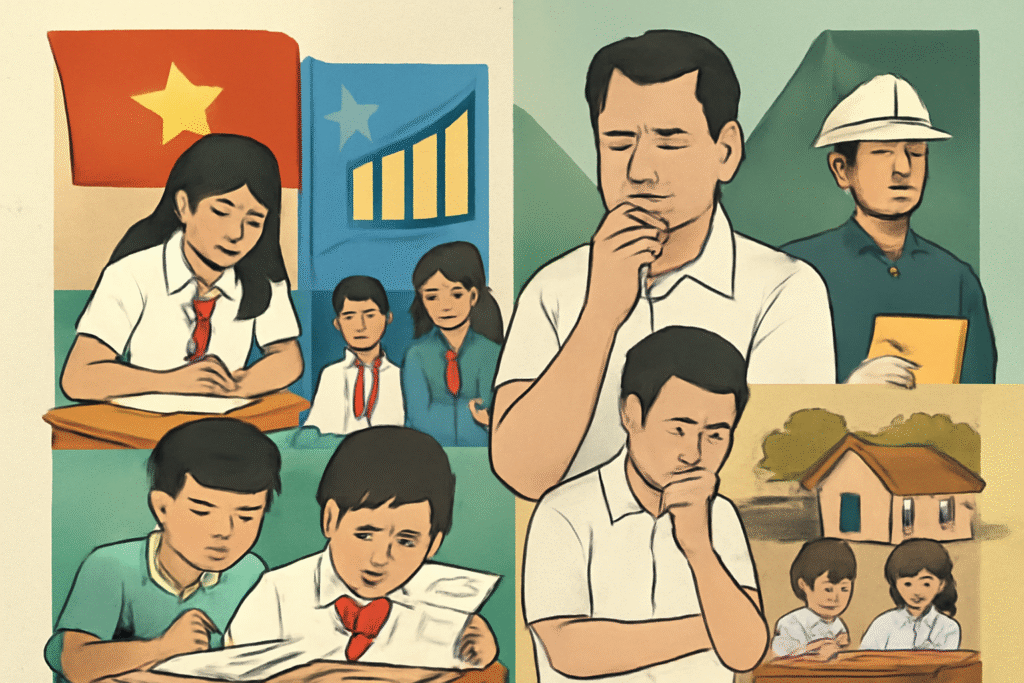
The educational system in Vietnam has undergone considerable development in recent years, establishing itself as one of the most progressive systems in Southeast Asia. While the country has achieved significant success in improving literacy rates and educational access, there remain several challenges to be addressed in order to ensure continued progress.
Achievements
Vietnam’s education system is known for its high literacy rate, which stands at over 94%. This success can largely be attributed to the government’s dedication to providing free and compulsory education to children aged 6 to 14. As a result, the country has been able to provide foundational education to millions of children, contributing to social and economic growth.
Internationally, Vietnam has garnered attention for its outstanding performance in the Programme for International Student Assessment (PISA) tests. Vietnamese students regularly outperform peers from more developed nations in areas like mathematics, science, and reading. This achievement is particularly impressive when considering the country’s relatively lower investment in education compared to other high-performing nations.
In addition to academic performance, Vietnam’s government has focused on vocational education and training (VET), ensuring that young people are equipped with the skills necessary for employment. This emphasis on practical, job-oriented training has been essential in reducing youth unemployment and fueling the country’s economic growth.
Challenges
Despite these notable achievements, Vietnam faces several key challenges. One of the most pressing concerns is the widespread reliance on rote memorization in schools. This teaching method encourages students to memorize information without necessarily fostering critical thinking or problem-solving skills. While students often perform well on exams, this approach limits their ability to apply knowledge creatively in real-world situations.
Furthermore, there is a significant disparity in the quality of education between urban and rural areas. In major cities like Hanoi and Ho Chi Minh City, schools are better equipped with modern resources and well-trained teachers. However, students in rural regions often face poor infrastructure and lack access to educational tools, leading to unequal learning experiences across the country.
Teacher training is another area in need of improvement. Many educators are not sufficiently trained to adopt modern teaching methods or handle diverse classrooms. Professional development for teachers is often inadequate, and more investment in teacher education is needed to address this issue.
Conclusion
Vietnam’s education system has made impressive strides, particularly in terms of literacy rates and academic achievement. However, challenges such as outdated teaching methods, regional inequalities, and teacher shortages remain. Addressing these challenges will be key to further improving the education system and preparing future generations for success in an increasingly globalized world.